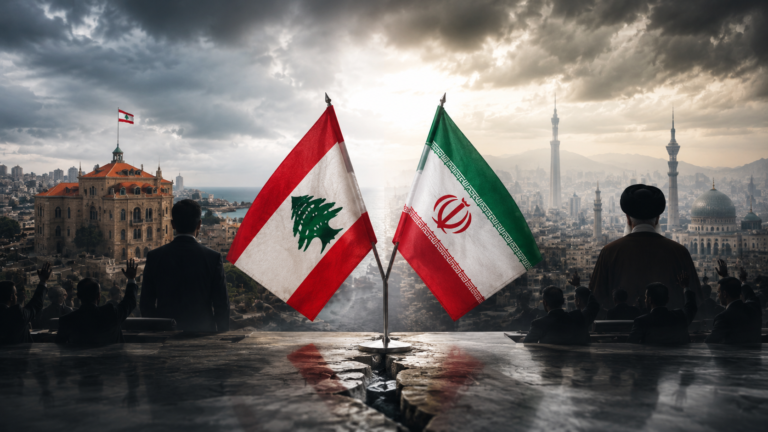
Beirut, Lebanon – The past few hours have witnessed an unprecedented diplomatic row between Baabda Palace and the Iranian leadership in Tehran. This development reflects the depth of the political and sovereignty crisis in Lebanon. It also reveals a profound chasm in the two sides’ visions regarding the management of national issues and regional negotiations.
This dangerous escalation came in the wake of firm and bold stances taken by Lebanese President Joseph Aoun. In response, Iranian Foreign Minister Abbas Araqchi launched an attack and adopted a sarcastic tone. These events prompted Lebanese political and parliamentary figures to demand a more radical and decisive stance toward Tehran, with some even calling for the severing of diplomatic relations.
Aoun: Lebanon is not a “bargaining chip”
The Lebanese president launched a public attack in an interview with CNN, accusing Tehran of using his country as a “bargaining chip” in its international negotiations, particularly with Washington. Aoun addressed the Iranian leadership directly, saying, “Our interests do not align with yours, and the Lebanese people are paying the price for your own agendas.”
Aoun also emphasized that “the Iranian Revolutionary Guard must understand that Lebanon is our country, not theirs,” stressing that the Lebanese people are tired of the ongoing war. Furthermore, he asserted that Naim Qassem, the Secretary-General of Hezbollah, does not represent the will of the Lebanese people or their aspirations for peace.
sarcastic Iranian response
This explicit stance prompted a fierce response from Iranian Foreign Minister Abbas Araqchi, who took to Twitter in a scathing tone. Araqchi wrote: “Based on Mr. Aoun’s statements, one might think that Iran occupied a fifth of Lebanon, displaced a quarter of the Lebanese population, and is bombing his country daily.”
Araqchi also denied the accusation of exploiting Lebanon, arguing that if this were the case, international agreements would have been reached long ago. He concluded his response with a provocative statement addressed to Aoun: “Save Lebanon from your real enemy, Mr. President.”
Lebanese calls to sever ties
Amid this diplomatic tension, Elie Mahfouz, head of the “Forces of Change” parliamentary bloc, called for a decisive response that goes beyond mere verbal sparring.
In a statement, Mahfouz asserted that the Iranian minister’s remarks constituted a “blatant transgression of the Lebanese presidency’s position,” describing the rhetoric of Iranian officials as reflecting a “guardian mentality.”
Mahfouz explicitly called for “severing relations with any country that opposes Lebanon or treats it with arrogance and contempt.” He also emphasized that Lebanon must reclaim its sovereignty as a free and independent nation, and that the dignity of its people is paramount.
This open tension reflects the complexities of the Lebanese landscape, where internal crises intersect with regional pressures. Consequently, this situation places the future of Lebanese-Iranian relations at a true crossroads. There is also internal division regarding how to address issues of sovereignty and independent national decision-making under the current circumstances.