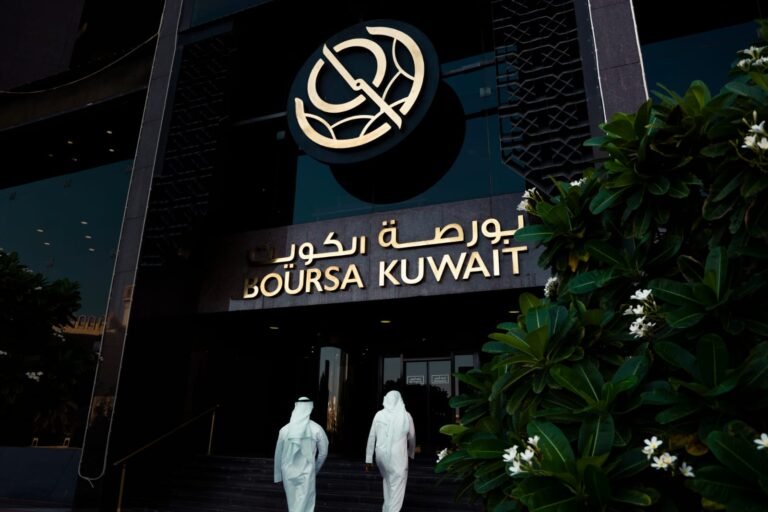
Kuwait – A specialized economic report issued by Al-Shall Consulting Company, based on data from the Kuwait Clearing Company, revealed the dominance of local investors in the Kuwait Stock Exchange during the period from the beginning of January to the end of May 2026.
According to the report, Kuwaiti investors’ total purchases of shares amounted to approximately 6.466 billion Kuwaiti dinars (around $19.8 billion). They thus accounted for 82.6 percent of the total value of shares purchased.
Local dominance of trading
The report indicated that Kuwaiti investors sold shares worth 6.293 billion dinars (approximately $19.3 billion), representing 80.3 percent of total sales. This resulted in net purchases of approximately 173.07 million dinars.
Al-Shall Economic Consultants affirmed that the Kuwait Stock Exchange remains a predominantly local market, with local investors continuing to be the primary drivers of liquidity. Furthermore, it was noted that investor interest from outside the Gulf Cooperation Council (GCC) countries exceeded that of their counterparts within the GCC.
Institutions are driving liquidity
Regarding the type of market participants, the institutional and corporate sector reinforced its position as the largest contributor to market liquidity, accounting for 66.9 percent of the total value of shares sold and 66.4 percent of the total value of shares purchased. This sector sold shares worth 5.242 billion dinars and purchased shares worth 5.199 billion dinars, resulting in net sales of approximately 43.6 million dinars.
Conversely, the share of individual investors in market liquidity trended downward, with individuals accounting for 30.4 percent of total shares purchased and 29.7 percent of total shares sold.
However, individuals recorded net purchases of 54.98 million dinars. The portfolio (client accounts) and investment funds sectors showed mixed performance. Portfolios recorded net purchases of 3.55 million dinars, while funds recorded net sales of approximately 14.9 million dinars.
A jump in active accounts
On the other hand, the report pointed to a positive indicator in the trader base; the number of active trading accounts increased by 6.6 percent between the end of December 2025 and the end of May 2026. The number of these accounts reached 50,811 active accounts by the end of May. This represents 10.8 percent of the total registered accounts, according to KUNA.
This distribution reflects growing confidence in the Kuwaiti financial market, with attention focused on the increasing role of institutions in determining and directing liquidity. This enhances the market’s depth and long-term stability, while Kuwaiti investors continue to dominate as key players across various sectors of the stock exchange.