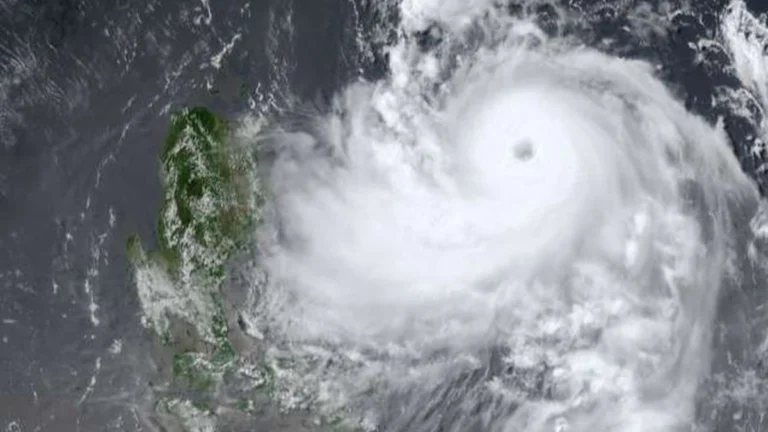
Tokyo, Japan – Japanese authorities declared a state of maximum alert on Friday as Typhoon Mikhala approached, ordering the evacuation of more than two million people from southern and western regions. This comes amid strong official warnings of the risks of flooding, landslides, and flash floods that could follow the storm’s arrival.
“Mikala” hits Taiwan before reaching Japan
This Japanese mobilization comes after Typhoon Mikhala—currently classified as a tropical storm—passed over neighboring Taiwan, causing near-total paralysis of public life. The accompanying torrential rains forced the closure of offices and schools. In addition, approximately six million people were prevented from going to work or attending educational institutions.
In Taiwan, flooding in Tainan City has forced the closure of a vital section of the railway line connecting the north and south of the island.
While no casualties have been reported so far, authorities are continuing precautionary evacuations of approximately 200 residents in the mountainous Hualien County. This is due to the rapid filling of natural lakes and the risk of their collapse.
Emergency measures and infrastructure paralysis
In Japan, the Ministry of Land, Infrastructure, Transport and Tourism took strict precautionary measures to prepare for the typhoon. These measures included canceling more than 200 flights and suspending dozens of train services. Furthermore, large sections of highways were closed.
The Japanese public broadcaster NHK reported that heavy rain began falling on the Kyushu region before the typhoon’s center made landfall. As a result, authorities issued an urgent Level 4 warning for landslides. This natural disaster coincides with the flow of a warm, humid air mass toward a persistent monsoon rain front over the Japanese archipelago. This increases the likelihood of widespread flooding.
Double storm and forecast for the coming days
The weather challenges don’t end with Mikhala; weather maps indicate that another tropical storm, Higos, is approaching eastern Japan by Saturday. Meteorologists warn that the convergence of these two storms will amplify the moist air pushing towards the monsoon rain front, potentially bringing record rainfall to the region next week.
While these rains may be beneficial for Taiwan in replenishing its water reservoirs after a dry winter, authorities in Japan are still advising citizens to exercise extreme caution due to lightning strikes, strong winds, and potential typhoons, especially in low-lying areas near rivers that are experiencing alarmingly high water levels. Rescue teams emphasize that the current priority is ensuring the evacuation of residents and safeguarding essential infrastructure before the storms reach their peak impact.