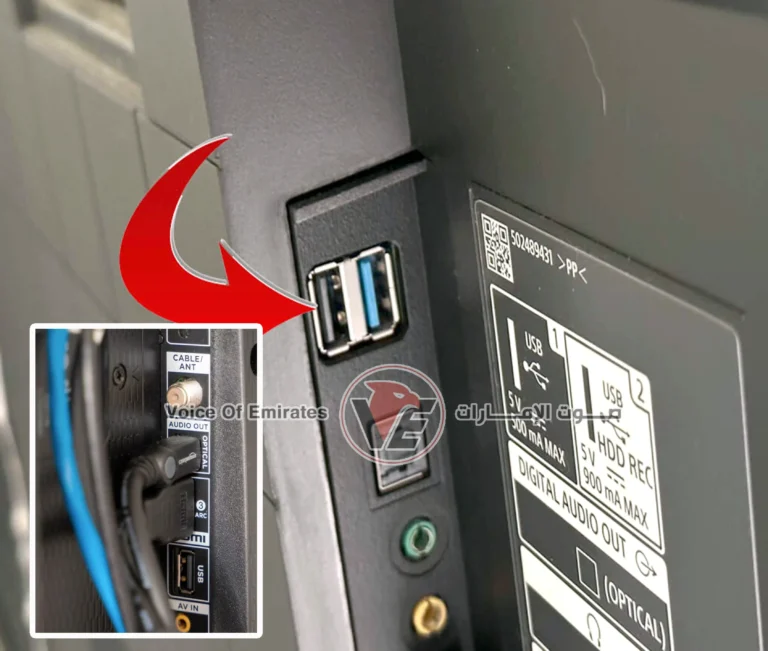
Washington, DC – A tech report has highlighted the various uses of USB ports on modern smart TVs. The report explained that these ports, though often overlooked, offer multiple functions beyond simply playing media or connecting peripherals.
Play media without needing the internet
Information indicates that most modern TVs contain at least one USB port, whether of the traditional USB-A type or the newer USB-C.
These outlets have also begun to spread since the early 2000s. It has also become a common standard in most devices since 2010.
USB ports allow movies and audio clips to be played directly via external storage units, without the need for an Internet connection.
This provides a practical alternative in the event of a network outage.
Users should pay attention to the supported file formats.
Most modern TVs support FAT32 and exFAT, as well as common video formats
such as MP4, AVI, and MKV. It also supports audio formats such as MP3 and AAC.
Uses include lighting and recording
USB light strips can also be connected to enhance the viewing experience
with ambient lighting that changes according to the content being shown.
Some TVs also support USB microphones for use with voice commands, karaoke apps, and calls.
Other uses include turning the TV into a digital photo frame by playing slideshows from a USB storage device.
However, be aware of power consumption and the possibility of the image remaining static for extended periods on some screen types.
Shipping restrictions and compatible devices
Conversely, the report explained that using USB ports to charge phones
and tablets is possible but relatively slow, especially with older USB 2.0 ports.
These ports provide limited power, making charging significantly longer than traditional chargers.
It also noted that some devices requiring drivers, such as printers or optical drives, may not function when connected to a television.
This is due to the lack of support for these devices in the built-in operating systems,
although there are a few exceptions in certain devices.
The report concludes that USB ports on televisions offer numerous practical possibilities.
However, they remain limited by the capabilities of the device and the operating system.
Therefore, users should familiarize themselves with their device’s specifications before relying on them completely.