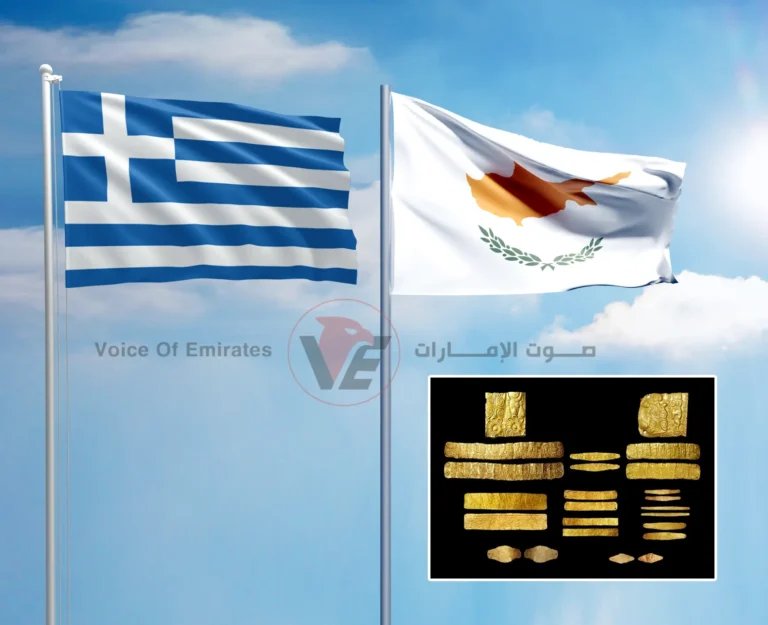
Nicosia, Cyprus – A recent archaeological study has revealed that goldsmiths on the island of Cyprus played
a pivotal role in connecting four major civilizations in the Eastern Mediterranean during the Bronze Age.
This reflects the island’s commercial and cultural prominence thousands of years ago.
Researchers explained that analyses of numerous gold artifacts discovered
at Cypriot archaeological sites revealed a unique blend of manufacturing techniques
and decorative motifs inspired by Egyptian, Mycenaean, Hittite, and Mesopotamian civilizations.
This suggests a significant exchange of expertise and raw materials among these civilizations.
A link between ancient trading centers
The study revealed that Cypriot artisans were not merely jewelers, but also vital links between ancient trading centers.
They contributed to the transmission of artistic techniques and cultural ideas via the maritime trade routes
that connected the eastern and western Mediterranean.
The research team noted that Cyprus enjoyed a strategic geographical location
that made it a major stop for merchant ships.
Its natural resources, particularly copper, also helped attract traders and artisans from across the region.
This led to the flourishing of metal industries, most notably gold production.
Ongoing cooperation and exchange between civilizations
The results confirmed that the analyzed gold pieces bear multiple technical signatures,
combining sophisticated manufacturing techniques and decorative motifs that reflect diverse cultural influences.
This indicates ongoing collaboration and exchange between Cypriot metalworkers
and the four civilizations, going beyond a mere exchange of goods.
The researchers believe this discovery offers a deeper understanding of
the nature of economic and cultural relations in the ancient world.
It also reinforces the evidence that Cyprus was an international center for trade and metalworking,
playing a prominent role in the transmission of knowledge and arts among the peoples of the Mediterranean.
This makes it one of the most important links in cultural exchange in ancient history.