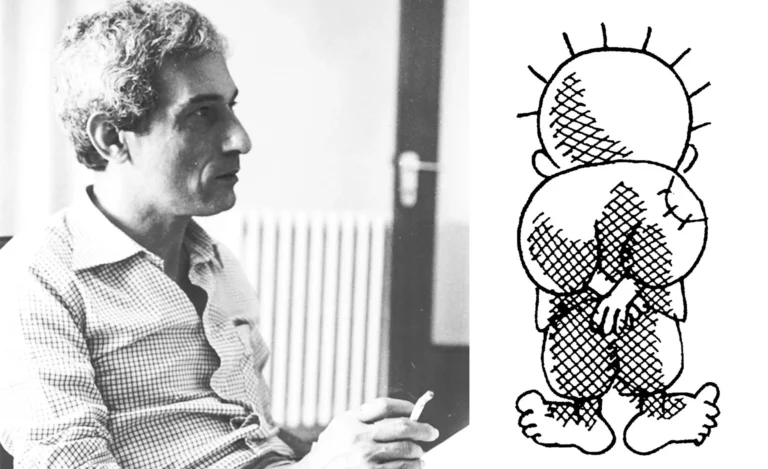
London, United Kingdom – Palestinians and Arabs are commemorating the assassination of Palestinian cartoonist Naji al-Ali, one of the most prominent figures in resistance art in the Arab world.
He was shot in London in 1987 and died from his injuries weeks later.
He left behind an artistic and political legacy that continues to resonate today.
The birth and fame of Naji al-Ali
Naji al-Ali was born in 1938 in the village of al-Shajara, Palestine.
He and his family were forced to flee following the 1948 Nakba,
settling in the Ain al-Hilweh refugee camp in southern Lebanon.
There, he experienced the hardships of displacement, which were clearly reflected in his artwork and drawings.
Al-Ali is best known for creating the character of “Handala,” the Palestinian child
who turns his back to the world with his hands clasped behind his back.
Handala has become one of the most prominent symbols embodying
the steadfastness of Palestinian identity and the rejection of occupation
and injustice. The character has transformed into an icon in Arab political journalism and art.
The most prominent cartoonists in Arab history
Naji al-Ali published thousands of cartoons in several Arab newspapers and was known for his bold criticism of the Israeli occupation.
He also did not hesitate to criticize the Arab world and its political leadership.
This is why his work gained widespread popularity and simultaneously sparked considerable controversy.
On July 22, 1987, al-Ali was shot outside the offices of the Al-Qabas newspaper in London.
He remained in a coma for several weeks before passing away on August 29 of the same year.
The circumstances of his assassination remain a subject of debate to this day.
Naji al-Ali remains one of the most prominent cartoonists in Arab history.
His iconic character, Handala, continues to be present at cultural and national events, on walls, and across media platforms.
Handala is considered an enduring symbol of the Palestinian cause and resistance against the occupation.