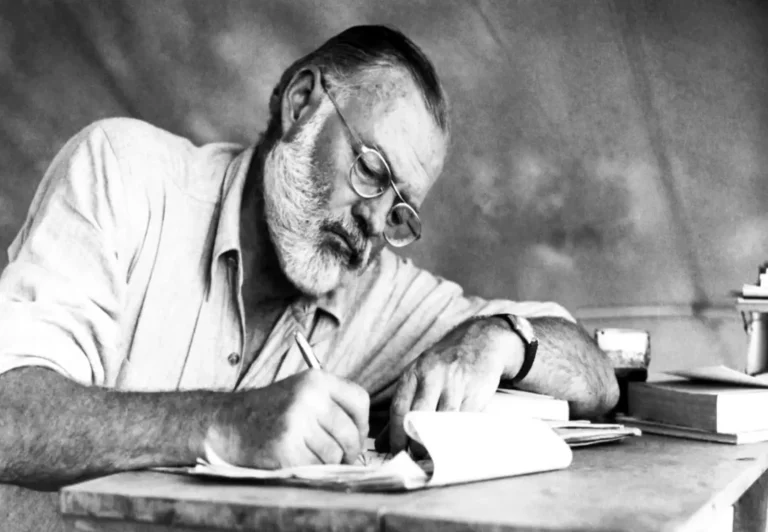
Washington, D.C. – The American writer Ernest Hemingway, winner of the Nobel Prize in Literature, was known by the nickname “Papa.”
This nickname stayed with him throughout his life and became part of his literary and personal image.
Many of his friends and readers even called him by this name more often than by his real name.
The secret behind Hemingway’s nickname “Papa”
This nickname stems from Hemingway’s years in Cuba, where he cultivated close relationships with fishermen and coastal residents.
They affectionately called him “Papa” as a sign of respect and admiration,
recognizing his strong personality, commanding presence, and willingness to help others.
The nickname quickly spread to his close friends and the literary world,
becoming the name most closely associated with the author of “The Old Man and the Sea,”
“A Farewell to Arms,” and “For Whom the Bell Tolls.” These works cemented his status
as one of the greatest writers of the 20th century.
Hemingway was renowned for his concise and straightforward literary style,
characterized by short sentences and direct language.
This style had a profound impact on world literature, inspiring generations of novelists and writers across the globe.
Hemingway wins Nobel Prize
In 1954, his career culminated in receiving the Nobel Prize in Literature,
in recognition of his literary creativity and his ability to develop the art of narrative fiction.
This was especially true after the immense success of his novel “The Old Man and the Sea,”
which is considered one of his most famous and influential works.
Hemingway was not only a novelist, but also a war correspondent
and adventurer whose extraordinary experiences were reflected in his writing.
He participated in covering numerous wars and major events, and his travels, hunting,
and sea experiences inspired much of his literary work.
Despite his death in 1961, the title “Papa Hemingway” remains prevalent in literary and cultural circles.
This is because he became a symbol of a writer who combined literary talent with a spirit of adventure.
He also left behind a timeless literary legacy that continues to be widely read
and translated into various languages around the world.