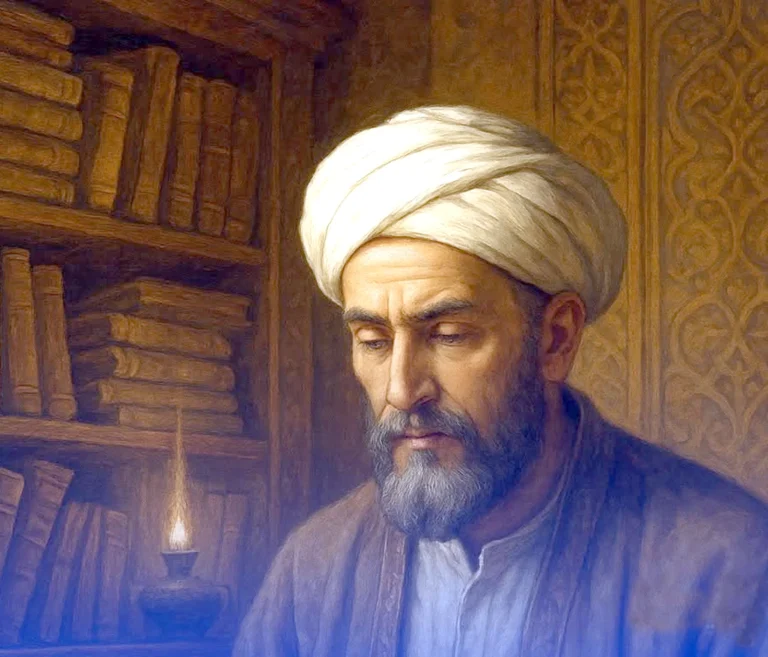
Bukhara, Uzbekistan – On this day, Muslims around the world commemorate the birth of Imam Muhammad ibn Ismail al-Bukhari, one of the greatest scholars of Hadith in Islamic history.
He is the author of “Al-Jami’ al-Sahih,” commonly known as “Sahih al-Bukhari.”
This book is considered by the majority of Muslim scholars to be the most authentic book after the Quran.
Birth and upbringing of the Imam of Hadith scholars
Imam al-Bukhari was born in 194 AH (810 CE) in the city of Bukhara, located in present-day Uzbekistan.
He grew up in a family known for its scholarship and piety.
From a young age, he displayed exceptional talent in memorizing the Holy Quran and the Prophetic traditions (Hadith).
Consequently, he became a leading authority on Hadith at an early age.
Imam al-Bukhari began his scholarly journey at the age of sixteen, traveling throughout the Islamic world.
He visited the Hijaz, Iraq, the Levant, Egypt, and Khorasan.
He met with more than a thousand of the leading scholars of his time,
collecting narrations and comparing their chains of transmission (Isnad).
His scholarly journey continued for decades.
He collected nearly 600,000 hadiths
Al-Bukhari was renowned for his meticulous methodology in accepting hadiths.
He did not merely rely on the trustworthiness and integrity of the narrator,
but also stipulated proof of a meeting between the narrator and the person from whom he narrated.
This condition distinguished his book with the highest levels of authentication and accuracy.
He was extremely thorough, and it is narrated that he would perform ablution
and pray two rak’ahs before recording many of the hadiths he included in his book.
During his travels, Imam al-Bukhari collected approximately 600,000 hadiths with their various chains of transmission.
However, he included only about 7,000 hadiths, including repetitions,
or approximately 2,600 hadiths without repetitions,
in his book “Sahih al-Bukhari.” This selection came after rigorous review
and examination that lasted for nearly sixteen years.
Works that are still under study
Imam al-Bukhari’s legacy was not limited to his Sahih collection; he also authored a number of important books on Hadith
and biographical evaluation, most notably al-Adab al-Mufrad, al-Tarikh al-Kabir, al-Tarikh al-Awsat, and Khalq Af’al al-‘Ibad.
These works remain subjects of study in Islamic universities and institutes to this day.
Imam al-Bukhari passed away in 256 AH (870 CE) in the village of Khartank, near Samarkand.
He left behind an enduring scholarly legacy that contributed to the preservation of the Prophetic Sunnah
and established the foundations of Hadith science, which scholars followed after him.
Therefore, his name remains present in the memory of the Muslim community as a leading scholar of Hadith
and a symbol of scholarly integrity and precision in transmitting the Prophetic traditions.