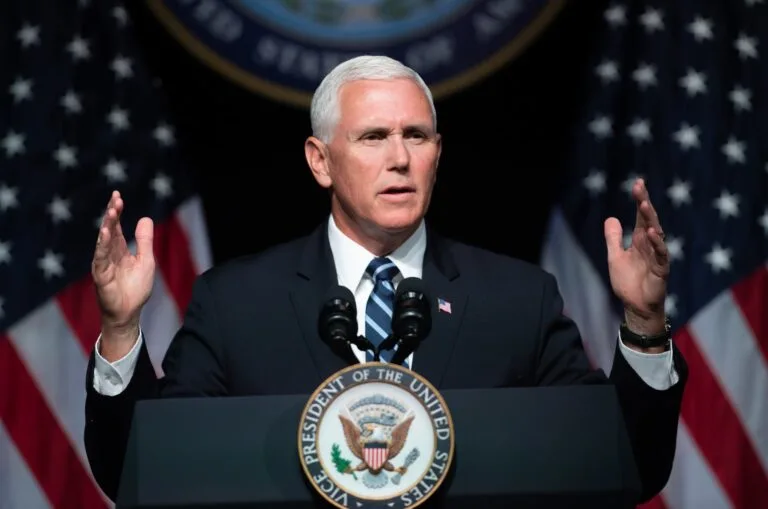
Washington, DC – Former US Vice President Mike Pence, in an interview with CNN, expressed his hope that the United States would lead a new and decisive military campaign against Iran. Pence also asserted during the interview that Tel Aviv is fully prepared to deploy and immediately join any potential military operation against Tehran if requested. This reflects an anticipated strategic coordination between traditional allies in confronting Iran’s growing regional influence.
The Revolutionary Guard and ballistic missile programs
During his remarks, Pence questioned the effectiveness of current deterrence, noting that those controlling Iran’s ballistic missile programs and drone networks, specifically the Islamic Revolutionary Guard Corps (IRGC), do not yet feel they have suffered a strategic defeat. The former vice president also asserted that Tehran’s military infrastructure and regional reach pose a persistent threat that must be dismantled at its core. He called for the full force of the U.S. military to be unleashed to destroy Iran’s offensive capabilities and control in the region.
Iran is likened to a “multi-headed snake”
In a powerful description of the nature of the Iranian regime and its network of alliances and regional proxies, Mike Pence likened Iran to a “multi-headed snake,” a clear reference to the numerous military and militia arms of Tehran in the Middle East. Pence explained that dealing with this type of threat requires a comprehensive offensive strategy that goes beyond mere diplomatic containment. It extends to launching direct and devastating strikes targeting the centers of power and supply bases of this regime, which he described as a destabilizing force regionally and internationally. The former vice president reiterated that hardline policies remain the best option for addressing this issue, particularly given the ongoing and complex security challenges facing the region as a result of Iran’s persistent policies.
The nuclear facilities file and the Strait of Hormuz
On a related note, regarding the outstanding technical and security issues, Pence addressed developments concerning the Iranian nuclear program, citing assessments indicating that Tehran may have transferred sensitive centrifuges to fortified and buried facilities such as the Kalinga facility. In his analysis of the Iranian position, he emphasized that the leadership in Tehran shows no genuine interest in peaceful solutions or de-escalation, stating that it is completely unconcerned with reopening the Strait of Hormuz to normal and safe international navigation without strong and direct pressure to deter its escalatory policies. In this context, these developments highlight the depth of the potential diplomatic and military crisis between the parties involved. All of this is unfolding amidst international anticipation of any actions the US administration or its regional allies might take in the near future to contain these escalating threats to international peace and security.