
- Chapter One: The Day Washington Signed the Court
- Chapter Two… Bush Closes the Door
- Chapter Three: Obama Discovers the Gray Area
- Chapter Four: Palestine Enters Through the Door Israel Could Not Close
- Chapter Five: Afghanistan: The Moment the Americans Entered the Interrogation Room
- Chapter Six: Trump Ups the Game
- Chapter Seven: Biden Hits the Brakes, But Doesn’t Change Direction
- Chapter Eight: From Bensouda to Karim Khan
- Chapter Nine: The Secret War Around the Court
- Chapter Ten: When Sanctions Themselves Became a Political Tool
- Chapter Eleven.. 2026: When the war reached the presidency of the court
- What has changed in the last 25 years?
- The real game: Who rules whom?
- The paradox created by Washington itself
- Is the court above the law?
- The final chapter… What happens if the strongest wins?
Abu Dhabi, UAE – The confrontation between the United States and the International Criminal Court (ICC) did not begin when the court issued arrest warrants for Israeli Prime Minister Benjamin Netanyahu and his former defense minister, Yoav Gallant. Nor did it begin when Donald Trump imposed sanctions on the court’s prosecutor. The story goes much further. Even before The Hague became an adversary of Washington, the United States was part of the moment the court was born. And before the court became a target of US sanctions, Washington itself had signed the treaty that established it. Then something even stranger happened:
The institution that Washington intended to be part of the international justice system later became one that the United States used its political and economic power to prevent from reaching Americans and Israelis. Thus began a story spanning nearly a quarter of a century; a story that was not merely a legal battle, but an escalating series of pressure tactics: signing agreements, then withdrawal, then legislation, then diplomatic pressure, then visa restrictions, then sanctions, and then—according to journalistic investigations—intelligence operations targeting the court itself, culminating in the freezing of assets belonging to judges and officials in 2026. The question that has remained unanswered throughout these years is: Can international justice reach the powerful, or are its limits defined by the political and military power of major nations?
Chapter One: The Day Washington Signed the Court
On July 17, 1998, a diplomatic conference in Rome adopted the Rome Statute, which established the International Criminal Court. The concept differed from the ad hoc tribunals that preceded it: the creation of a permanent court to deal with the most serious international crimes, primarily genocide, war crimes, and crimes against humanity. The United States was not absent from the scene. It signed the Rome Statute on December 31, 2000, at the end of President Bill Clinton’s term. However, the signature did not translate into ratification. Documents from the US State Department reveal that Clinton considered the treaty “fundamentally flawed” and therefore did not submit it to the Senate for ratification. Herein lay the first paradox of the story: Washington signed the Statute but refused to submit to its jurisdiction. The door remained open, but not definitively closed.
Chapter Two… Bush Closes the Door
On May 6, 2002, the George W. Bush administration took the most explicit step. The United States formally notified the United Nations that it did not intend to become a party to the Rome Statute and that it did not consider itself bound by the obligations arising from its previous signature. But the matter did not end with political withdrawal. That same year, the US Congress passed the “Protection of American Servicemen,” widely known as the Hague Invasion Act, as part of a legislative package aimed at protecting American military personnel and officials from potential prosecution before an international court whose jurisdiction Washington did not recognize.
The US administration also began signing bilateral agreements with various countries to prevent the extradition of American citizens to the court. The message was clear: the world could establish a court, but the United States would not allow it to become a court above American sovereignty.
The US State Department said at the time that Washington would continue to support the principle of holding perpetrators of war crimes accountable, but rejected the court in its existing form. It also began seeking agreements to prevent the extradition of Americans to the court. Thus, the confrontation shifted from “Should we join?” to “How do we prevent the court from reaching us?”
Chapter Three: Obama Discovers the Gray Area
The relationship with the court was not consistent throughout the following years. The Obama administration did not join the Rome Statute, but it pursued a more pragmatic policy. Documents from the Obama administration state that the United States, while not a party to the Rome Statute, was prepared to support some of the court’s prosecutions and provide assistance in cases that aligned with U.S. interests and laws. Washington also participated as an observer in meetings of the Assembly of States Parties. This was perhaps the most complex phase of the relationship: Washington did not accept the court, but it also did not want to destroy it. It was willing to use it when its outcomes were in line with U.S. interests, while maintaining a fundamental rejection of its jurisdiction over Americans. In other words: the court was acceptable when it prosecuted others, but unacceptable when it came to Americans. This idea would later become the crux of the conflict.
Chapter Four: Palestine Enters Through the Door Israel Could Not Close
On January 1, 2015, Palestine submitted a declaration accepting the Court’s jurisdiction and then acceded to the Rome Statute on January 2. The Statute entered into force for Palestine on April 1, 2015. In 2018, Palestine referred the situation to the Prosecutor, requesting an investigation into crimes committed since June 13, 2014.
On February 5, 2021, the Pre-Trial Chamber of the Court ruled that the Court had territorial jurisdiction over the situation in Palestine, including Gaza, the West Bank, and East Jerusalem. Less than a month later, on March 3, 2021, the Office of the Prosecutor announced the formal opening of an investigation. This changed the dynamics of the situation. The American case was no longer solely focused on Afghanistan; the Court was now increasingly concerned with Israel.
The United States and Israel share a fundamental legal point: neither is a party to the Rome Statute. However, the court has stated that non-membership alone does not resolve the issue of jurisdiction when it comes to crimes committed within the territory of a state party or in circumstances where the Rome Statute allows for the exercise of jurisdiction. This is where Washington and Tel Aviv began to view the court as a shared strategic problem.
Chapter Five: Afghanistan: The Moment the Americans Entered the Interrogation Room
In the background lay a more sensitive issue for Washington: Afghanistan. The preliminary investigation into the situation in Afghanistan had begun in 2006. In 2019, the Pre-Trial Chamber refused to authorize the opening of the investigation, despite acknowledging that there were reasonable grounds to believe that crimes within the Court’s jurisdiction had been committed. But the matter did not end there. On March 5, 2020, the Appeals Chamber overturned the decision and authorized the Prosecutor to open the investigation. Crucially for Washington, the investigation encompassed allegations of crimes committed, according to its scope, by members of the US armed forces and intelligence services in the context of Afghanistan. Here, the Trump administration felt that the Court was no longer a distant institution in Europe; it was becoming increasingly accessible to American soldiers and officials.
Chapter Six: Trump Ups the Game
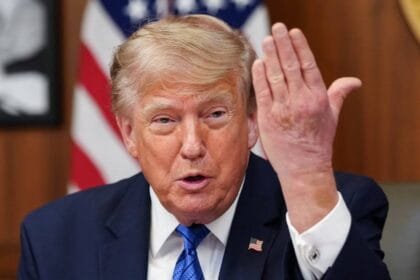
On June 11, 2020, Donald Trump issued an executive order declaring a national emergency related to the International Criminal Court (ICC). The order authorized the freezing of assets belonging to individuals associated with the court’s efforts to investigate U.S. citizens or U.S. allies, and opened the door to restrictions on their entry into the United States. Then, on September 2, 2020, Washington placed the ICC’s then-prosecutor, Fatou Bensouda, and a senior official in her office, Phakiso Mokotchoko, on its sanctions list. Their assets under U.S. jurisdiction were frozen, and visa restrictions were imposed. This was an unprecedented moment: a superpower wielding the weapon of economic sanctions against officials of an international judicial body. Washington was no longer merely asserting that the court lacked jurisdiction; it was effectively declaring: we will use the instruments of American power to prevent it from exercising that jurisdiction.
Chapter Seven: Biden Hits the Brakes, But Doesn’t Change Direction
In April 2021, after Joe Biden took office, his administration lifted the sanctions imposed by Trump on Bensouda and Mokotchoko. The State Department said the sanctions and visa restrictions were “inappropriate and ineffective.” But lifting the sanctions was not an acknowledgment of the court’s jurisdiction. On the contrary, the Biden administration reiterated its objection to the court’s attempt to exercise jurisdiction over citizens of non-member states, including the United States and Israel. So, Biden removed the weapon, but he did not change Washington’s legal position. This is a crucial point that is often lost in the political headlines. The confrontation is not over; only the tools have changed.
Chapter Eight: From Bensouda to Karim Khan
In 2021, British prosecutor Karim Khan assumed the role of Prosecutor of the International Criminal Court (ICC). He faced a formally established Palestinian case and an Afghan case closely aligned with US interests. Then came the Gaza War following the attacks of October 7, 2023. In May 2024, Khan announced his intention to seek arrest warrants for Netanyahu and Gallant, along with Hamas leaders. Subsequently, on November 21, 2024, Pre-Trial Chamber I issued arrest warrants for Netanyahu and Gallant. In the same ruling, the Court rejected Israel’s arguments regarding its jurisdiction. This marked a historic turning point. For the first time, the Court found itself in direct confrontation with the leadership of a US ally. The issue then shifted from the question of “Does the Court have jurisdiction?” to a more serious one: “Can the Court’s orders be enforced when the warrants target the head of government of a superpower?”
Chapter Nine: The Secret War Around the Court
Herein lies the most sensitive part of the story. In May 2024, The Guardian, in collaboration with +972 Magazine and Local Call, published an investigative report alleging that Israel had waged a covert campaign against the court for nearly nine years. According to the report, the campaign included surveillance, communications hacking, pressure tactics, attempts to discredit, and the targeting of court officials. Fatou Bensouda was at the heart of the story. The report stated that Yossi Cohen, the former head of Mossad, was personally involved in efforts to pressure her to halt the Palestinian investigation. The report also detailed intelligence operations targeting the communications of court officials and attempts to ascertain the direction of the investigation before official decisions were made.
Even more alarming is that Bensouda herself later stated that she and her family had been subjected to direct threats during her work, describing what she endured as intimidation tactics and intense pressure. However, this point should be approached with caution from a journalistic perspective: these accounts emerged from investigative reports, testimonies, and media sources, and not all of them have been substantiated by an independent court ruling. Israel denied the allegations. The investigation quoted Netanyahu’s office as saying that the questions posed to him contained “false and baseless” claims, and the Israeli military denied monitoring the court or conducting intelligence operations against it.
And here the story becomes even more intriguing: the court wasn’t just fighting in the courtroom. According to the investigations, another war was being waged outside: intelligence, information, communications, diplomatic pressure, defamation, threats, and then sanctions.
Chapter Ten: When Sanctions Themselves Became a Political Tool
In February 2025, Trump returned to the White House. On February 6, 2025, he issued a new executive order imposing sanctions on the court. The official US document stated that the court had taken “illegal and baseless” actions against the United States and its ally Israel, specifically linking the decision to the arrest warrants issued against Netanyahu and Gallant. Subsequently, the US Treasury Department added Karim Khan to the sanctions list. Thus, the old equation returned: the court takes legal action → Washington takes economic action. But this time, the Palestinian issue was at the heart of the conflict.
Chapter Eleven.. 2026: When the war reached the presidency of the court
In 2026, US sanctions were no longer merely targeting a prosecutor. The US Treasury Department kept its sanctions program against the International Criminal Court (ICC) active, recording related actions during May 2026. Then came the most significant moment. On August 18, 2026, the United States imposed sanctions on the ICC President, Japanese Judge Tomoko Akane, and the court’s chief prosecutor, Abdoulaye Seye. The sanctions froze any assets under US jurisdiction and barred access to the US financial system. According to Reuters, the Trump administration justified the decision by objecting to the court’s investigations against officials in countries that had not accepted its jurisdiction, most notably the case concerning Israel. Here, the pursuit reached a new level: the target was no longer just the individual leading an investigation, but the ICC presidency itself, which was now under US pressure. The following day, Japan expressed regret over the sanctions, reaffirming its support for the court and its role in prosecuting serious international crimes.
What has changed in the last 25 years?
If we place these events side by side, a completely different story emerges: 1998, the court is born; 2000, Washington signs; 2002, Washington withdraws and builds a legal wall to protect its citizens; the Obama years see selective cooperation with the court without joining it; 2015, Palestine joins the Rome Statute; 2020, the court moves closer to the Americans in Afghanistan, and Trump imposes sanctions; 2021, Biden lifts sanctions but maintains the legal rejection of the court’s jurisdiction; 2024, the court requests the arrest of Netanyahu and Gallant; 2025, Trump reinstates sanctions and targets the prosecutor; 2026, sanctions reach the court’s president. Between these milestones, journalistic investigations reveal an alleged years-long Israeli intelligence campaign against the court. So the story is no longer simply, “America doesn’t recognize the court.” This has been a known fact since 2002. The more important story is: how did the means of resisting the court evolve from legal rejection to building a protection system, then to diplomatic pressure, and finally to sanctions, while Israel—according to investigative reports—was simultaneously waging a covert battle against the Palestinian investigation?
The real game: Who rules whom?
Herein lies the greatest paradox. The court has no army. It has no international police force. It cannot forcibly enter a country to execute an arrest warrant. Its primary power lies in legal legitimacy and international cooperation. But the major powers possess something else: sanctions, financial leverage, diplomatic pressure, intelligence agencies, alliances, and the ability to influence countries that depend on their relationship with Washington. Therefore, the conflict surrounding the court is not a conflict between two equal institutions. It is a conflict between the rule of law and the law of power.
The paradox created by Washington itself
There is a fundamental contradiction in the American position. Washington says it does not recognize the court’s jurisdiction because it has not joined the Rome Statute. Yet the United States itself has supported the court’s prosecutions at various times when those prosecutions served its interests. The Obama administration’s State Department explicitly acknowledged that Washington was prepared to support certain court prosecutions and provide assistance when it aligned with American interests and US law. Conversely, when the court approached the Americans in Afghanistan, the institution itself became—according to Washington—”illegitimate” and “politicized.” And when it approached Israel, the same rhetoric reappeared. This raises a question that transcends the American and Israeli positions: Is the problem with the court itself, or with the limits of jurisdiction as defined by international powers?
Is the court above the law?
It is inaccurate to present the court as a flawless institution. The court has indeed faced criticism regarding its jurisdiction, case selection, slow procedures, the difficulty of enforcing arrest warrants, and its reliance on state cooperation. The United States and Israel also have legal and political arguments against certain aspects of the court’s jurisdiction. However, the real dispute is not about the existence of these criticisms, but rather about the means used to address them. There is a difference between challenging the court’s jurisdiction, rejecting its authority, exerting diplomatic pressure, imposing sanctions on its judges and prosecutors, and attempting to influence investigations through intelligence channels—if such allegations are substantiated. This is the line that has transformed the court’s story from a legal dispute into a battle for the independence of an international institution.
The final chapter… What happens if the strongest wins?
At the end of the chase, the court appears besieged from all sides. Russia has taken action against court officials. The United States has imposed sanctions on officials and judges. Israel has rejected the court’s jurisdiction and its arrest warrants. Meanwhile, dozens of countries cling to the court and the Rome Statute. The conflict is no longer merely an American-Israeli one; it has become a test for the entire international system. The question that will determine the court’s future is not whether it can issue an arrest warrant—it has proven it can—but rather, who can enforce it? If the court can issue an arrest warrant for a head of government, but the world’s most powerful nation can punish the judge who issued the order, then the real battle is no longer about the warrant itself. It becomes about who defines international justice: the law? The Security Council? The most powerful nation? Networks of alliances? The global economy? Or the power to impose sanctions?
Therefore, the question that deserves to remain open is not: Is the International Criminal Court strong enough to hold the powerful accountable? Rather: Can there be true international justice if the powerful have the ability to punish those who try to implement it? Perhaps this is the real battle that began in Rome in 1998 and did not end in The Hague in 2026.