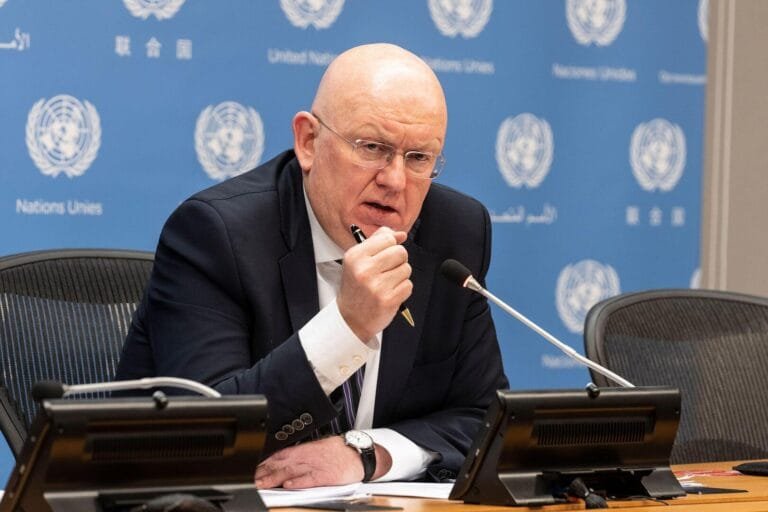
New York, USA – Vasily Nebenzya, Russia’s Permanent Representative to the United Nations, warned that the use of attack drones during security incidents in the Libyan city of Zawiya exposes weaknesses in the mechanisms for enforcing the arms embargo on Libya. Speaking at a Security Council session, Nebenzya explained that recent developments necessitate strengthening oversight of the movement of weapons and military equipment destined for Libya. He also stressed the importance of documenting violations related to their use.
He noted that the proliferation of drones in areas of Libyan conflict represents a development that warrants close monitoring, particularly given the ongoing political and security divisions within the country and the multiplicity of armed groups. The Russian official called on the Panel of Experts of the Sanctions Committee to continue monitoring arms transfers and use in Libya. He also stressed the importance of providing accurate information regarding the sources of military equipment and how it reaches the various parties involved.
Nebenzia also addressed the political situation in Libya, stating that ending the internal division requires consensus among the Libyan parties. He further called for support for efforts aimed at reaching a broadly acceptable political settlement. He affirmed that Moscow supports any move that could contribute to advancing the political process. At the same time, he stressed that any new understandings must be based on the Libyan legal and institutional framework.
The Russian envoy’s remarks come at a time when Libya is facing ongoing security and political challenges, amid international efforts to curb the flow of weapons and promote stability. Simultaneously, there are attempts to end the political division and unify state institutions. Observers believe that the issue of drones has become one of the most significant challenges to enforcing the arms embargo on Libya, especially given the rapid advancements in modern warfare technologies, which necessitate increased international oversight to prevent their use in internal conflicts.