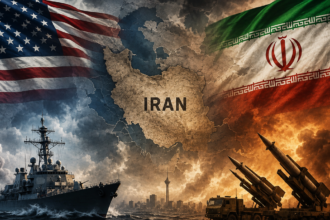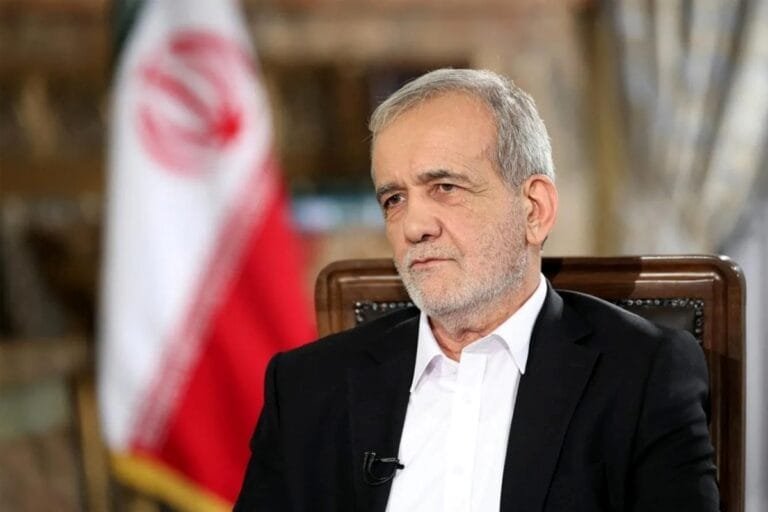
Tehran, Iran – Iranian President Masoud Pezeshkian revealed that a significant portion of the arrangements related to the Memorandum of Understanding signed with the United States remains confidential. He emphasized that the agreement was signed at a high presidential level. This was done to lend it greater credibility. It also provided the necessary political and legal guarantees for its continuation.
Behind the scenes and details of the signing of the joint memorandum of understanding
In the third part of a comprehensive televised interview with the Iranian people, marking two years since he assumed the presidency, Pezeshkian stated that an understanding on the general outlines and fundamental principles of the memorandum had already been reached. He indicated that the signing ceremony was initially planned between Jay D. Vance. At that time, Vance was Vice President of the United States under Donald Trump. Later, the Iranian side planned to include Parliament Speaker Mohammad Bagher Ghalibaf.
The Iranian president explained that US President Donald Trump later decided to personally sign the memorandum. This prompted the Iranian side to immediately raise the level of signing to that of the head of state as well. He added explicitly that “the full details of these arrangements remain confidential,” clarifying that what has been revealed so far represents only a small portion of the historic agreement’s provisions. These are the only parts permitted for public release.
Significant political, economic, and regional gains
Pezeshkian emphasized that the Memorandum of Understanding (MOU) contributed directly and decisively to ending the war in Lebanon. It included precise arrangements for lifting the blockade. It also focused on recovering frozen Iranian funds, and releasing a portion of them. Furthermore, it encompassed the easing and eventual lifting of some international sanctions. He also noted that the MOU included specific arrangements for reopening the Strait of Hormuz under defined parameters. He affirmed Iran’s full commitment to the agreement. At the same time, he explained that Tehran had taken certain escalatory measures in response to the other party’s procrastination and failure to fully uphold its commitments.
Pezeshkian strongly rejected portraying the memorandum as a “defeat” for his country, asserting that Iran had achieved significant and tangible strategic gains. He further explained that Iran had effectively compelled the United States to back down from the imposed sanctions. These important statements shed light on the intricacies of the recent diplomatic understandings. This comes amidst widespread regional and international anticipation regarding the implications of this agreement for the future of the region.