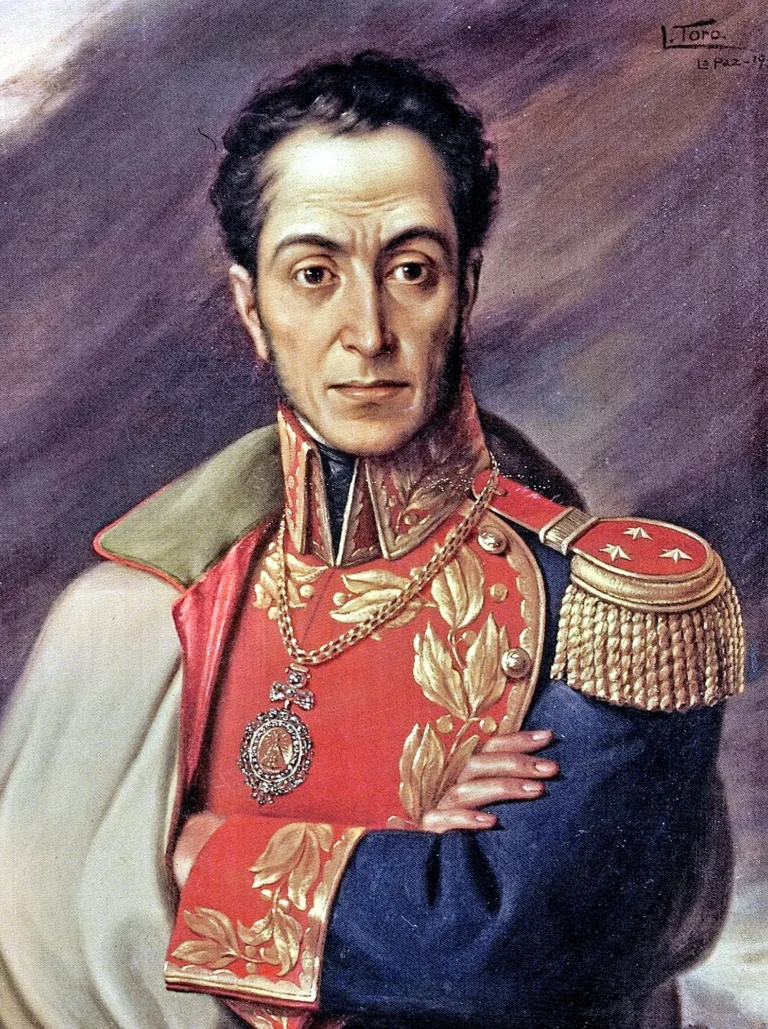
Caracas, Venezuela – Simón Bolívar is considered one of the most prominent revolutionary leaders in modern history,
having led liberation movements in South America against Spanish colonialism,
earning him the title “Liberator of Latin America.”
His influence extended beyond the continent, immortalizing his name in several countries around the world,
including Egypt, which named one of Cairo’s most famous squares after him.
Bolívar was born in 1783 in Caracas to a wealthy family and received his education in Europe.
There, he was influenced by the ideas of the Enlightenment and the French Revolution,
and returned to his country convinced of the right of peoples to freedom
and independence. He then embarked on a long struggle against Spanish rule.
Political challenges and internal conflicts
Bolívar led a series of military campaigns that culminated in the liberation of Venezuela, Colombia, Ecuador, and Peru.
He also played a key role in the founding of Bolivia, the nation that bears
his name in honor of his contribution to its independence,
making him one of the world’s most prominent figures in national liberation movements.
Despite his significant military successes, Bolívar faced political challenges
and internal conflicts that prevented him from realizing his dream of
a permanent union of Latin American nations.
He eventually stepped down from power and died in 1830,
leaving behind a political and intellectual legacy that continues to be valued today.

National icon in Latin American countries
In Egypt, Simón Bolívar Square, located in the Garden City district of Cairo,
bears the name of the Latin American leader and features a statue of him,
a gift from the Venezuelan government to Egypt.
This gesture reflects the historical ties and friendship between the two countries,
making the square a testament to Bolívar’s global stature and a symbol of
the struggle of peoples for freedom and independence.
Simón Bolívar remains a national icon in Latin America, with numerous cities,
universities, institutions, and streets named after him.
His life story is studied as one of the most prominent leaders who contributed
to ending Spanish colonialism and shaping the modern Latin American continent.