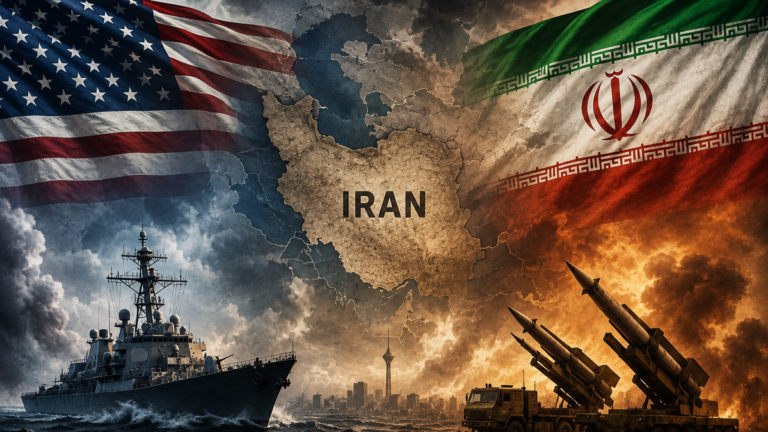
Washington, DC – Nearly six months after the outbreak of military conflict between the United States and Iran, Washington’s decision-making circles are experiencing escalating disagreements that extend beyond operational assessments. These disagreements have shifted to a desperate search for a political and military solution to a conflict whose escalation has become prohibitively costly. Additionally, its options have become increasingly limited.
Military warnings of air force depletion
Sources familiar with the matter told CNN that the Chairman of the Joint Chiefs of Staff, General Dan Keane, informed President Donald Trump’s advisors of the country’s urgent need to find a way out of the war. Keane warned that the military options being considered for escalation could backfire. He also emphasized that airstrikes alone would not be sufficient to achieve the stated U.S. objectives.
These warnings were not limited to General Keane alone; he also discussed them with CIA Director John Ratcliffe, Secretary of State Marco Rubio, and Vice President J.D. Vance. This discussion aimed to coordinate positions before presenting them to Trump. The military leadership expressed clear reservations about a plan proposed last July to carry out harsh strikes inside Iran. They feared it would exacerbate the crisis. Although Trump initially seemed willing to approve it, the president later backed down following warnings from regional allies about targeting Gulf energy facilities. Nevertheless, the specter of escalation remains.
Ammunition stockpiles under scrutiny
In addition to the strategic challenges, the dwindling stockpile of ammunition in the US military has become a worrying factor in wartime calculations. Sources close to the matter indicated that vital ammunition stockpiles have fallen to critical levels. This topic was raised in high-level meetings between Keane and Trump.
The Gulf allies also suffer from concerns about the lack of air defense systems to deal with any possible Iranian response. This attrition affects not only the Iranian front. It also threatens Washington’s ability to fulfill its obligations towards Ukraine and Israel. This also came amid Trump’s dissatisfaction with the publicity of these reports, which affect his negotiating image.
The Pentagon is exploring unconventional options.
Faced with this ongoing military stalemate for the past six months, the Department of Defense and Central Command have begun a comprehensive reassessment of their strategy. The Department has called for unconventional approaches to punishing Tehran. In addition, current indicators suggest that Washington is caught between the need to achieve its strategic objectives and the need to avoid a full-scale confrontation. Such a confrontation would deplete its remaining defense capabilities.