
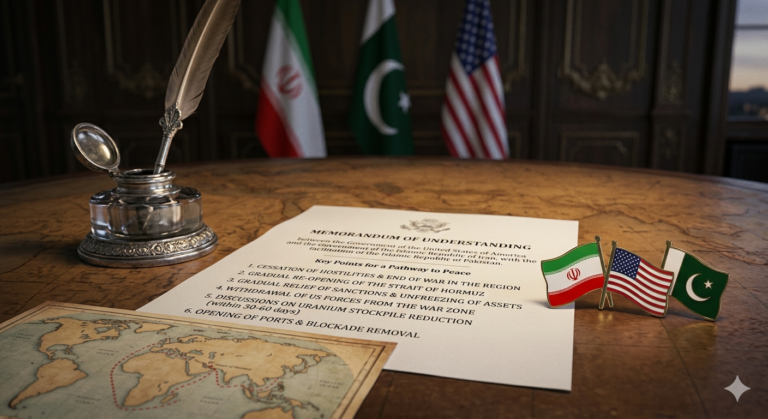
Washington, DC – The American news website Axios has revealed the precise details of a draft, non-final memorandum of understanding between the United States and Iran, which has become known in diplomatic circles as the “Islamabad Agreement.”
The website quoted a well-informed diplomat from the mediating country and a senior US official as saying that the memorandum includes a 60-day extension of the current ceasefire. It also stipulates the immediate reopening of the strategic Strait of Hormuz to international shipping without any transit fees. In return, there will be a gradual, phased easing of economic sanctions imposed on Tehran based on its actual level of compliance with its commitments.
The diplomat explained to Axios that the United States and Iran had already reached a common understanding on the approved draft text. However, he added that the agreement still awaits final approval from the Supreme Leader in Tehran.
Qatari negotiations and the framework of the nuclear file
According to the report, this preliminary agreement was the result of intensive rounds of negotiations led by Qatari mediator Ali al-Thawadi with Iranian Foreign Minister Abbas Araqchi.
The memorandum includes a firm commitment from the Islamic Republic not to pursue the acquisition or development of nuclear weapons. It also includes working to resolve the technical disputes surrounding its current stockpile of highly enriched uranium.
In this regard, a senior US official indicated that one of the vital options under consideration is reducing the uranium enrichment level and diluting its concentration within Iranian facilities themselves. He also confirmed that this process would be carried out under the direct supervision and inspection of UN inspectors (the International Atomic Energy Agency).
However, the official stressed that the implementation of any practical commitments in the nuclear file would remain contingent upon reaching a second, more detailed agreement in the future. This is due to the complexities of the issue.
Frozen funds and Pakistani mediation
According to an Axios report, officials from the United States, Iran, and Qatar discussed at length the possibility of establishing a mechanism that would allow Tehran access to a portion of its frozen assets and funds in Qatar, with their use restricted exclusively to purchasing and securing humanitarian and medical supplies.
According to current indications, if the document receives final approval and is officially and publicly signed by the relevant parties, it will be called the “Islamabad Agreement” or the “Islamabad Declaration.” This is due to the pivotal and coordinated role played by both Qatar and Pakistan as key mediators in bridging the gaps between Washington and Tehran. They also contributed to ending the latest round of conflict in the region.