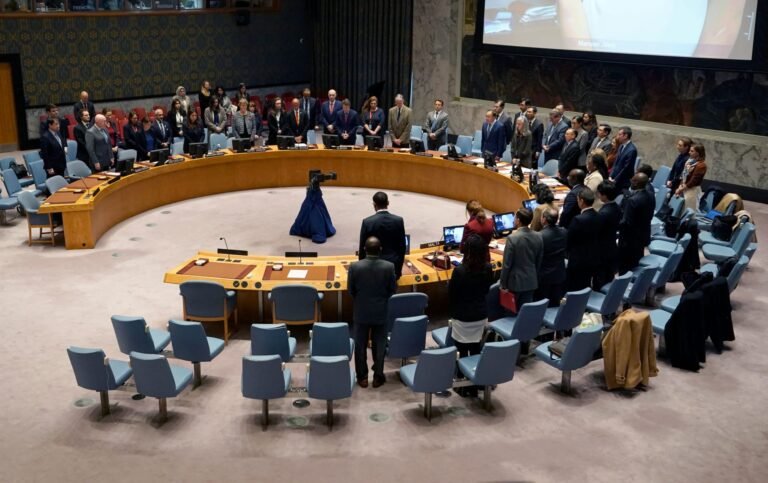
New York, USA – Amid rapidly evolving developments on the Lebanese front, the UN Security Council is holding an emergency meeting today to discuss the repercussions of the Israeli military escalation. This UN move comes in the wake of the Israeli army’s capture of the historic medieval Beaufort Castle (Qalaat al-Shaqif) inside Lebanese territory. Observers consider this move a significant military transgression with both symbolic and strategic dimensions.
French move and calls for calm
According to diplomatic sources speaking to AFP, the request for this emergency meeting came at the initiative of France, which expressed grave concern over Israel’s expansion of its military offensive deeper into Lebanese territory.
In this context, French President Emmanuel Macron condemned this escalation. In a firm statement, he asserted that “nothing justifies the major escalation underway in southern Lebanon.” He called on all parties to exercise restraint and work to end the fighting immediately to prevent the region from sliding into a full-blown war.
American diplomatic efforts
On the parallel diplomatic front, a senior US official revealed to AFP that US Secretary of State Marco Rubio had conducted a series of intensive calls in recent hours. These calls included Lebanese President Joseph Aoun and Israeli Prime Minister Benjamin Netanyahu.
According to the official, these discussions focused on exploring opportunities to advance a diplomatic track to end the conflict. The official also reiterated the US position that “Hezbollah must be the first to cease its attacks,” indicating Washington’s attempt to hold the party primarily responsible for the continuation of the state of war.
Significance of control over “Al-Shaqif Castle”
The Israeli forces’ capture of Beaufort Castle further complicates the situation on the ground. This strategically located castle, overlooking vast areas of southern Lebanon, has historically been a focal point in past conflicts.
Military analysts believe this capture aims to secure advanced observation posts and expand the security perimeter for Israeli ground operations. This intensifies their military pressure on the region.
Today’s Security Council meeting is expected to reveal a sharp division among international powers on how to address this escalation. While France and other countries are calling for an immediate cessation of hostilities, other parties insist on the need for security arrangements that would prevent a recurrence of Hezbollah attacks on Israeli civilians.
Between the raging conflict in southern Lebanon and the diplomatic corridors of New York, the world is watching to see whether the emergency meeting will produce real pressure to halt the military operation, or whether it will amount to nothing more than the usual statements of condemnation.