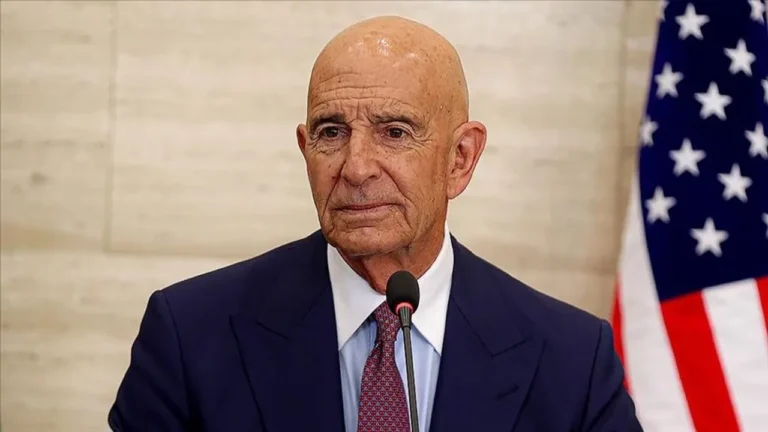
Washington, DC – The US State Department announced today the end of Tom Barrack’s tenure as US Special Envoy to Syria. This move represents a significant shift in the US administration’s diplomatic approach to the most complex issues in the Middle East.
US State Department statements
The announcement came via an official statement from US Secretary of State Marco Rubio, who confirmed that the decision was part of a realignment of strategic priorities. Rubio wrote on his X-rated account: “Ambassador Tom Barrack has played an invaluable role as our Special Envoy to Syria.”
He added: “While Barrack’s official designation ends today, he will continue to play a strategic leadership role for the Trump administration in both Syria and Iraq.” The Secretary emphasized that Barrack’s experience and deep understanding of the “America First” principles will continue to deliver significant gains for the country.
Barak: A close ally at the heart of diplomacy
This decision comes nearly a year after Tom Barrack’s appointment. Barrack has served as the US ambassador to Turkey since May 2015 and also held the dual role of Special Envoy for Syria. Furthermore, Barrack, who served as an advisor to Trump’s 2016 campaign and chaired the inaugural committee, is very close to President Donald Trump. This gives him considerable confidence in handling files that require a delicate balance.
A year’s harvest of strategic moves
During his tenure, Barak spearheaded efforts that led to tangible changes. These included contributing to the lifting of sanctions imposed under the Caesar Act. Furthermore, he brokered ceasefire agreements between Israel and Syria. He also promoted scenarios for unifying Syrian territory under the government of Ahmed al-Sharaa (al-Julani). He focused on coordinating with Turkey to integrate the Syrian Democratic Forces (SDF) into the Syrian army. He also effectively addressed the complexities of the Iraqi situation.
Ending his official role as special envoy does not signify a decline in his influence. Rather, it reflects the US administration’s desire to streamline its diplomatic structure while retaining a figure who enjoys the White House’s absolute confidence. This individual will manage sensitive files with greater flexibility. Barak will retain a central, albeit unofficial, role, or will operate through new assignments in Syria and Iraq. He draws upon his extensive experience and broad regional connections, acquired during his active diplomatic career.