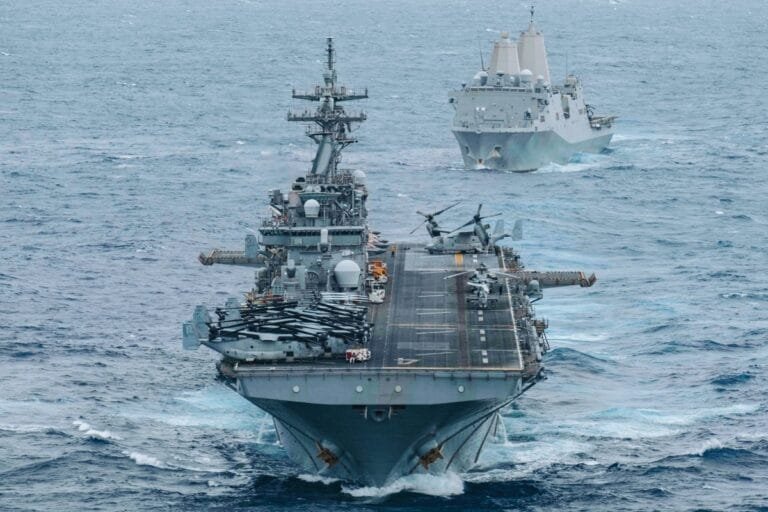
The Arabian Gulf region has witnessed rapidly accelerating field developments, as the US Central Command (CENTCOM) announced the resumption of a comprehensive naval blockade against Iran, a move described as the effective end of the temporary ceasefire that the region had recently experienced. This strategic measure aims to undermine Tehran’s economic and military capabilities and cut off the lifeline of foreign currency resulting from oil exports and maritime logistics.
“End of the Ceasefire” and Parallel Airstrikes
The US move was not limited to the naval blockade; it was preceded by an hour by intense airstrikes targeting military sites deep inside Iran. The US Central Command confirmed that these strikes aimed to “weaken the military capabilities that Tehran uses to carry out repeated attacks against commercial vessels in the Strait of Hormuz.”
These movements come amidst an unprecedented military buildup, as military sources revealed the presence of more than 20 warships and hundreds of military aircraft conducting extensive operations in the region, declaring the readiness of the US military to respond forcefully at any time to ensure the security of vital waterways.
Double Pressure Strategy
Washington is currently following what can be described as a “double pressure strategy.” It imposes strict restrictions on the movement of ships to and from Iranian ports as a naval blockade, and at the same time, it is working to expand the scope of economic sanctions imposed on Iranian financial institutions to undermine the regime’s military and financial activities simultaneously.
This escalation comes after Washington considered the recent Iranian attacks on commercial vessels in the Strait of Hormuz a flagrant violation of the memorandum of understanding signed last month, which had been hoped to open nuclear negotiation channels and reduce tensions.
Regional Repercussions and Security Risks
These developments coincide with escalating regional tensions, as field reports indicated Iranian retaliatory attacks targeting facilities in Gulf countries, placing the region in a complex security scenario. US forces in the region remain on high alert, amidst international fears of the scope of the military confrontation expanding and threatening international navigation in one of the most vital waterways in the world.