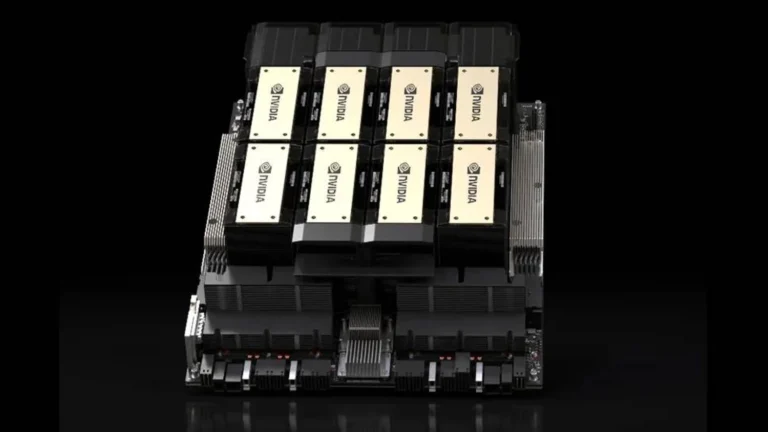
Washington, United States – A senior US official confirmed that Nvidia has begun exporting limited quantities of its H200 artificial intelligence chips to China. This move comes amidst ongoing US restrictions on exporting advanced technologies to Beijing, and within the escalating competition between the world’s two largest economies in the fields of AI and semiconductors.
Limited Shipments of H200 Chips
Speaking before the House Foreign Affairs Committee, in remarks cited by “agencies” and followed by “Voice of the Emirates,” US Under Secretary of Commerce for Industry and Security, Alan Estevez, stated that shipments of Nvidia H200 chips have already begun arriving in China. These chips are considered the company’s second most powerful AI processors, though Estevez emphasized that the exported quantities remain highly limited.
He explained that the Department of Commerce briefed Congress on a classified list containing chip purchase requests and the status of each request, without disclosing further details to the media regarding the specific companies or the overall volume of the shipments.
Approvals for Chinese Companies
According to previous reports, a subsidiary of ZTE and two other Chinese companies obtained official US approval to purchase advanced AI chips from Nvidia and AMD.
Additionally, the US Department of Commerce had approved requests in May from about ten major Chinese firms to acquire H200 chips, including tech giants Alibaba, Tencent, and ByteDance. However, actual deliveries had not commenced at that time, with limited shipments only recently beginning to flow.
Chips at the Heart of Washington-Beijing Competition
Exports of AI chips to China remain one of the most contentious friction points in the technological and geopolitical rivalry between the United States and China. Washington consistently seeks to restrict Beijing’s access to cutting-edge technologies that could be deployed in sensitive military applications and high-performance computing.
In the same context, Democratic Representative Gregory Meeks criticized President Donald Trump’s administration, arguing that it has relaxed export controls on advanced chips by using them as a bargaining chip in trade negotiations with China. Meeks pointed out that the State Department has not added any new Chinese firms to its export control watchlists since last October, marking the longest such pause in over a decade.