Moscow, Russia – The Russian Defense Ministry announced on Sunday that the Russian military had carried out a “large-scale retaliatory strike” targeting military installations and sensitive infrastructure inside Ukraine.
The Russian attack represents a significant escalation in military operations. A sophisticated arsenal of hypersonic and ballistic missiles was used. This came in response to what Moscow described as “Ukrainian terrorist attacks” targeting civilian sites deep inside Russia.
Details of the “retaliatory strike”
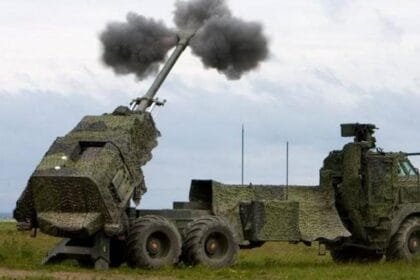
An official statement from the ministry indicated that the operation was carried out through the precise integration of tactical aviation capabilities, missile units, and artillery, along with squadrons of attack drones.
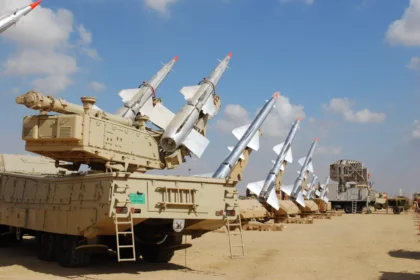
The statement revealed that the strike involved the use of advanced missile families, including the Oreshnik ballistic missile, the Iskander missile, and the Kinzhal (Dagger) hypersonic missile. Additionally, Zircon naval missiles, supported by cruise missiles, were employed.
The ministry confirmed in its report that these strikes “successfully hit” vital strategic targets, including military command and control centers, air bases, and defense industry facilities. The scope of the strikes also expanded to include oil refineries, power plants, and transportation networks used by Kyiv to support its military operations. Ammunition and fuel depots, as well as positions held by Ukrainian forces and “foreign mercenaries” in 149 separate geographical locations, were also targeted.
Implications of Russian escalation
This massive military deployment comes in response to a direct order from Russian President Vladimir Putin, following a deadly Ukrainian attack that, according to Moscow, targeted a student dormitory in the town of Starobylsk in Luhansk (which has declared its annexation by Russia).
Putin had described the Ukrainian drone attack on Friday as an “act of terrorism.” He emphasized that the response would be decisive and instructed the Ministry of Defense to prepare immediate proposals for retaliation.
Continued progress on the ground
In parallel with the long-range missile strikes, the Russian Ministry of Defense indicated that its forces were continuing their significant advances on several fronts, particularly in Donetsk, Kharkiv, Zaporizhzhia, and Dnipropetrovsk.
Moscow claimed to have inflicted heavy casualties and material losses on Ukrainian forces. Electronic warfare systems and advanced military equipment were also destroyed. Moscow continues to assert that its military operation, launched on February 24, 2022, is proceeding according to its stated objectives of “protecting the population of Donbas.”
In contrast, Kyiv and its Western allies continue to describe the operation as a “large-scale war of aggression,” while these clashes are also witnessing the destruction of vast quantities of Western weaponry. This equipment includes German Leopard 2 tanks and American and British armored vehicles previously supplied to the Ukrainian army by NATO countries.
This escalation signals that the Russian-Ukrainian conflict has entered a new phase characterized by the intensive use of advanced missile technology. Through these strikes, Moscow is attempting to deplete Ukraine’s military and logistical capabilities. This comes at a time when international pressure is mounting on both sides of the conflict to find a political solution, amid fears of a complete collapse of stability in Europe.