Seoul, South Korea – The Blue House (South Korea’s presidential office) announced on May 6 that Seoul no longer needs to consider participating in US security initiatives in the Strait of Hormuz. This came after the Trump administration’s abrupt decision to halt “Project Freedom” just two days after its launch.
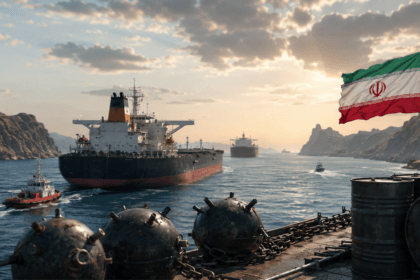
The project aimed to secure commercial vessels stranded in the strait amid escalating tensions between Washington and Tehran.
Turning the page on military participation
South Korean presidential officials stated that “since the U.S. operation has effectively ended, the government’s review of joining the project is no longer necessary.”
This stance ended a period of political and diplomatic uncertainty in Seoul regarding the extent of South Korean military involvement in a potential confrontation in the region.
For his part, Wi Song-rak, director of the National Security Office at the Blue House, explained during a press conference that the government had been seriously considering the “Ocean Freedom” initiative and had planned to review the “Freedom Project.” However, recent developments on the ground and the latest US decision have rendered participation unnecessary.
Mystery surrounds the explosion of the ship “Namo”.
Regarding the situation of the South Korean cargo ship “HMM Namu,” which suffered a mysterious explosion and fire in the Strait of Hormuz on May 5, Director Wei stated that the vessel is currently being towed. It is expected to arrive at the nearest port early tomorrow morning. He indicated that a specialized investigation team will be dispatched to assess the damage and determine the cause of the incident. It is worth noting that the incident occurred in an area that has witnessed frequent clashes, according to the South Korean news agency Yonhap.
Regarding the possibility of a military attack on the ship, Wi Song-rak said, “Initially, the possibility of an external strike was raised, and we considered holding an emergency meeting of the National Security Council. However, after reviewing additional information, it became clear that the attack hypothesis was not confirmed.”
He explained that the ship did not experience flooding or a sharp listing, which supports other hypotheses that are currently being investigated. He concluded by noting that the American hints about the necessity of participating in the project were based on the assumption that the ship had been attacked. He added, however, that this still requires further evidence and on-site verification.