Washington, DC – In remarks reflecting the hardline stance within the Republican Party, US Congressman Wesley Hunt called for continued and intensified military and diplomatic pressure on Tehran. Hunt described the Iranian government as experiencing unprecedented “desperation” and weakness. He also asserted that now is not the time to retreat, but to complete the mission.
“No turning back halfway”
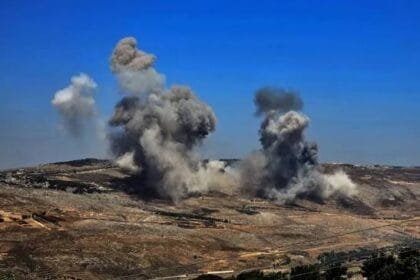
Hunt likened the ongoing military operations and the blockade imposed on Iran’s southern coast to a project that cannot be abandoned. In a media briefing, he stated, “Iran is not strong now; it is desperate. Its navy has been crushed, and its forces have been dismantled.” He emphasized the necessity of continuing the naval blockade and military operations to achieve all of America’s objectives. He also warned that any retreat now would give the Iranian regime a chance to regroup.
Islamabad negotiations under pressure from the blockade
These statements come at a sensitive time as the region awaits a second round of negotiations in the Pakistani capital, Islamabad. While Iranian Foreign Minister Abbas Araqchi has already arrived in Pakistan, the US delegation, including envoy Steve Wittkopf and Jared Kushner, President Donald Trump’s son-in-law, is scheduled to arrive today, Saturday. The Trump administration aims to force Tehran to accept harsh terms through its “strangling blockade” of Iranian ports, including reopening the Strait of Hormuz and surrendering its enriched uranium. Tehran, for its part, insists that the key to a solution lies in lifting the blockade first. This has brought the Islamabad negotiations to a standstill, awaiting a diplomatic breakthrough.
Targeting the Chinese “secret fleet”
In a related development, the House Select Committee on China welcomed the recent actions taken by the U.S. Treasury Department against the “shadow fleet” used by Beijing to purchase Iranian oil.
The committee revealed via its X platform that China relies on thousands of oil tankers flying foreign flags to circumvent sanctions. U.S. lawmakers consider this a direct financing of the Iranian regime. Washington recently imposed sanctions on independent Chinese refineries and shipping companies linked to this “shadow fleet.” These sanctions aim to impose what Treasury Secretary Scott Bisnett described as a “crippling financial stranglehold” on Tehran to prevent it from funding its military operations or its proxies in the region.