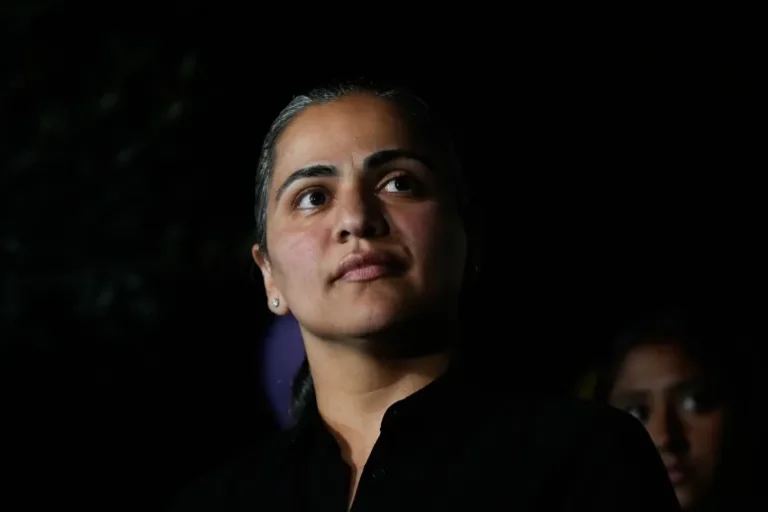
California, USA – Decision Desk HQ announced that Ayesha Wahab won the special election for the California House of Representatives seat formerly held by Eric Swalwell, a historic result that makes her the first person of Afghan descent elected to the US Congress. The victory marks a new milestone in Wahab’s political career, which began in local government and progressed to the California State Senate, before now reaching the federal arena. Wahab’s election follows Swalwell’s resignation from his seat last April amid allegations of sexual misconduct. The vacancy created a highly publicized contest, particularly with the participation of two Democratic candidates: Wahab and Melissa Hernandez. The race was characterized by high political spending and heated debates on both local and national issues.
Wahhab’s victory does not merely represent a transition from one political position to another, but rather carries great symbolic significance for the Afghan community and Muslims in the United States. Wahab was the first Muslim and first American of Afghan descent elected to the California State Senate. She has now become the first American of Afghan descent to reach Congress through elections.
Clear lead in the primaries
Wahab had demonstrated early electoral strength when she outperformed Hernandez by more than 25 points in the nonpartisan primary held in June. However, the race proved difficult in its final stages, as her campaign faced significant spending from external political action committees (PACs) that sought to either support her opponent or attack Wahab’s political record. According to media reports, major PACs spent at least $5 million in the final weeks of the race on activities opposing Wahab. These committees allow unlimited spending to support or oppose candidates, making the scale of the spending a significant factor in the election.
The American Israel Public Affairs Committee (AIPAC) was among the most prominent entities involved in the political spending related to the race. Reports indicated that more than $3 million was used to bolster Hernandez’s campaign. However, the ads opposing Wahab largely focused on her record on public safety issues during her time as a California senator. They did not directly address her positions on Israel or the war in Gaza.
Wahab and a political career that began in Hayward
Ayesha Wahab has a remarkable personal and political story. Born in 1987 in New York City to Afghan refugee parents who fled Afghanistan during the Soviet-Afghan War, she was raised in foster care after her father was killed and her mother passed away. She was later adopted by an Afghan-American family in the Fremont and Hayward area of the San Francisco Bay Area. Wahab earned a doctorate in social work from the University of Southern California and then entered local politics. In 2018, she was elected to the Hayward City Council, becoming one of the first Afghan-Americans to hold elected public office in the United States. She is often described as the first Afghan-American woman elected to political office in the country.
In 2022, Wahab achieved another milestone by being elected to the California State Senate for the 10th District, becoming the first Muslim and the first Afghan-American in the Senate. She later served as Assistant Majority Leader, further solidifying her presence within the state legislature. This progress paved the way for her transition to federal politics.
A progressive program and clear positions on the economy and health
Wahab is part of a wave of progressive Democratic candidates running for Congress this year. Her platform overlaps with the agendas of several other progressive candidates, including Abdul Sayed, who won the Democratic nomination for a Senate seat in Michigan, and Claire Valdez, who won the Democratic nomination for a House seat in New York. Prior to the special elections, Wahab appeared on Twitch with left-leaning influencer Hassan Baker, where she discussed a range of issues that are part of the progressive discourse within the Democratic Party. She expressed support for universal healthcare, higher taxes on billionaires, a temporary ban on data centers, legalized abortion, and the abolition of Immigration and Customs Enforcement (ICE). These positions reflect a political orientation that seeks to expand social and economic programs. She also advocates for stricter policies regarding the wealthy and immigration.
In 2025, Wahab, with input from the California Jewish Legislative Caucus, co-sponsored a resolution for the state Senate calling for an end to the “humanitarian catastrophe in Gaza” and the release of the Israeli hostages kidnapped by Hamas on October 7, 2023. This record indicates Wahab’s attempt to combine a position critical of U.S. military support for Israel with an emphasis on humanitarian and political issues related to civilians and hostages.
Legal and electoral disputes before the vote
The campaign was not without its legal and political controversies. Wahab held a press conference before the election, announcing her intention to file a complaint with the Federal Election Commission (FEC) regarding what she described as defamatory statements published on social media. She stated that her team had contacted Meta and would request the FEC to investigate whether certain campaign-related activities should be disclosed, describing those activities as election interference. Conversely, Wahab herself was the subject of an FEC complaint filed by a Hernandez supporter, alleging an illegal $60,000 donation. Wahab contested the complaint, adding a legal dimension to an already highly competitive race.
A victory that opens the door to the November battle
Ayesha Wahab’s victory in the special election gives progressive Democrats and the Afghan and Muslim communities a significant political moment, but it is not the end of the race. The seat will go to the polls in November, when Wahab and Hernandez will compete for a full term. This development comes at a time of growing debate in the United States about diversity in political representation within Congress, particularly the representation of women, immigrant communities, and religious and ethnic minorities.