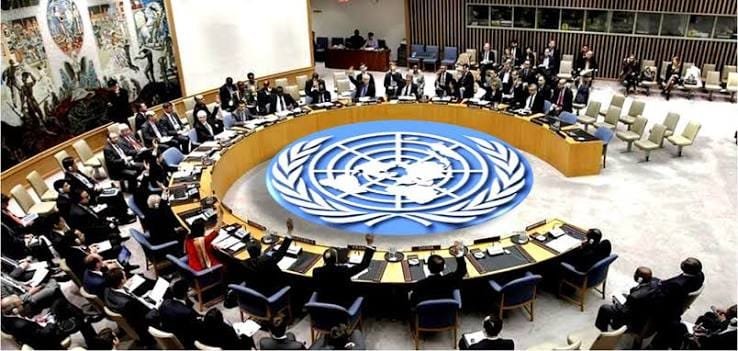
New York, USA – The UN Security Council will hold a closed-door session on Friday for a second round of “indicative voting” as part of the process to select the next UN Secretary-General. This comes amid a tight race among eight candidates and international divisions that could keep the selection process open for months before a final decision is reached. Three men and five women are vying to succeed current Secretary-General António Guterres, whose second term ends on December 31, 2026. Guterres has led the international organization for a full decade.
secret voting mechanism
Under the established mechanism, the fifteen members of the Security Council assess each candidate using three options: “encourage,” “discourage,” or “no opinion.” This is done while maintaining strict confidentiality regarding the identities of the countries and their voting intentions. This allows for a gradual assessment of each candidate’s chances without publicly revealing the positions of individual countries.
Greenspan leads the first round
Former Costa Rican Vice President and current UNCTAD President Rebecca Greenspan led the first round of voting on July 30, having received the most “encouragement” votes among the eight candidates.
List of competitors
The list of candidates, in addition to Greenspan, includes former Guyanese Foreign Minister Caroline Rodriguez-Birkett, IAEA Director General Rafael Grossi, and former Chilean President Michelle Bachelet. It also includes Ecuadorian diplomat María Fernanda Espinosa, diplomat Yvonne Abdul Baki, former Senegalese President Macky Sall, and Ugandan diplomat Olara Otunnu.
Conditions for winning the position
To secure the position, a candidate needs the support of at least nine of the fifteen members of the Security Council. Furthermore, none of the five permanent members can exercise their veto power. The candidate’s name is then submitted to the General Assembly for final approval.
Speculation about a Latin American woman
All eyes are on the possibility of a woman being chosen for the first time in the history of the United Nations. However, the established practice of geographical rotation among continents suggests that the position will likely be held by someone from Latin America and the Caribbean, following a succession of leaders from other continents. Nevertheless, the race remains open to potential surprises. This is especially true given that the five permanent members of the Security Council have yet to officially announce their preferred candidates. Furthermore, Russia has indicated that new names may emerge on the list of candidates in the coming period. This could potentially reshuffle the cards in the race for the world’s top diplomatic post.