
- From “victory” to “preventing the initiative”
- Why isn’t ground force enough?
- The Houthis possess weapons that do not require a large army.
- So, what is the “minimum” level of deterrence?
- Saudi Arabia: A deterrent element that cannot be ignored
- The most dangerous point in the equation: the Red Sea
- Deterrence does not require an “army to defeat the Houthis”.
Abu Dhabi, UAE – The most pertinent question in Yemen is no longer: Can the Houthis’ opponents capture Sana’a? That question assumes a conventional war, while more than a decade of conflict has demonstrated that the Houthis do not wage war by those rules. A more accurate question is perhaps different: What minimum force would deter the Houthis from initiating a war, even without their defeat or the collapse of their power?
The equation becomes more important as Yemen enters a new escalation phase in August 2026, as UN envoy Hans Grundberg warned that the country faces the most serious risk of returning to a large-scale war since the 2022 truce, following the escalation of Houthi operations in Marib, Hadramawt, Mocha and other areas, coinciding with the return of attacks on shipping in the Red Sea and the Gulf of Aden.
From “victory” to “preventing the initiative”
The Houthis do not need to occupy all of Yemen to achieve strategic gains. Their ability to launch missiles and drones, threaten maritime navigation, and keep their adversaries on high alert gives them a capacity for influence far exceeding their conventional resources. The paradox lies in the fact that conventional military superiority does not necessarily translate into superior deterrence. An analysis by the Center for Strategic and International Studies (CSIS) describes the Houthis as a relatively small and difficult-to-target guerrilla fighting force that has, over the years of war, managed to disperse and conceal its assets and adapt to attacks. The analysis also warns that depleting their military capabilities does not guarantee a change in their behavior unless accompanied by political and economic tools. Here, a different concept of deterrence emerges: the goal is not to render the Houthis powerless, but rather to ensure that the cost of their decision to escalate exceeds the expected benefit.
Why isn’t ground force enough?
The anti-Houthi camp possesses a significant geographical advantage and substantial human and military resources, but it is not a unified army in the traditional sense. Developments in 2026 reveal the ongoing reshaping of the security structure in government-controlled areas. Saudi Arabia has worked to reorganize anti-Houthi forces, particularly in the south, following the collapse of the military structure associated with the Southern Transitional Council and the withdrawal of Emirati forces. This reorganization has included efforts to strengthen the Homeland Shield Forces and restructure the military command. In Hadramawt specifically, the anti-Houthi camp comprises multiple formations, including the Homeland Shield Forces, the First Military Region, and government forces in Marib, in addition to tribal and local forces. This reflects the breadth of available power but also reveals the problem of multiple centers of decision-making and conflicting loyalties.
Therefore, simply increasing the number of fighters does not create deterrence. Deterrence begins when these disparate forces transform into a single system capable of making decisions, moving, and sustaining the fight without collapsing politically or logistically.
The Houthis possess weapons that do not require a large army.
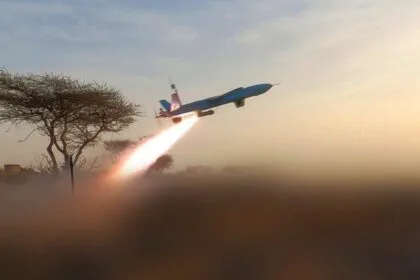
The Houthis’ strength is not solely based on tanks and artillery. The experience gained during the war, along with the development of missiles, drones, and naval capabilities, has enabled the group to threaten targets far beyond the internal front lines. In July 2026, Reuters reported that Iran had transferred Revolutionary Guard personnel, advisors, and missile and drone components to the Houthis, indicating continued Iranian military and technical support for the group. Tehran denies providing this type of support. In August, the Houthis claimed responsibility for a drone attack on an Aramco facility in Jazan, though there was no official Saudi confirmation of the attack at the time. These developments reveal the core of the equation: the Houthis do not need overwhelming military superiority; they need only the sustained ability to inflict disproportionate damage on their adversaries.
So, what is the “minimum” level of deterrence?
The minimum strategic requirements of the anti-Houthi camp can be defined by four interconnected capabilities:
First, the ability to prevent advances. The Houthis must understand that any attempt to expand their lines of control, especially towards strategic areas like Marib or the western coast, will be met with a resilient, organized force, not just a temporary reaction. This means that sustained defense is more important than a large-scale offensive.
Second: The ability to protect the homeland. Deterrence is ineffective if the Houthis can strike cities, vital infrastructure, ports, and airports in a way that renders the government forces unable to continue the war. In such cases, air defense systems, early warning systems, infrastructure protection, and service continuity become integral to the deterrent force itself. The naval experience offers a clear lesson: even the strongest forces can face a war of attrition if the attacker uses inexpensive means against costly defensive ones. CSIS addressed this paradox in defense operations against Houthi missiles and drones, emphasizing that deterrence cannot be reduced to the price of the attacking weapon versus the price of the interceptor missile.
Third: Sustainability
This is perhaps the weakest link. A protracted war requires an economy capable of funding the military, paying salaries, and providing fuel, food, and maintenance. However, the internationally recognized Yemeni government still faces enormous economic constraints. The International Monetary Fund has indicated that the halt in oil exports since 2022 has deprived the government of a major source of revenue and foreign currency, and that reserves barely cover about a month’s worth of imports. It has also noted the government’s reliance on external support, particularly from Saudi Arabia. In other words, an army that can fight for a month is not necessarily a deterrent force; a truly deterrent army is one that its adversary knows can continue fighting beyond the first, second, and third months.
Fourth: The ability to translate military action into political action.
This is a point that is often overlooked. If each escalation leads to increased Houthi recruitment, mobilization of their supporters, expanded Iranian support, and the group’s portrayal as having “stood up to the bigger powers,” then military strikes could become a political victory for the Houthis. Therefore, the CSIS analysis concluded that deterrence is not solely about military force, but also about understanding the adversary’s motivations, their perception of the potential gains and losses, and the existence of political incentives that would lead them to choose de-escalation.
Saudi Arabia: A deterrent element that cannot be ignored
Any discussion of the anti-Houthi forces without Saudi Arabia would be incomplete. Saudi support is no longer merely financial aid; it has become a significant factor in rebuilding the Yemeni government’s military and security apparatus. But herein lies a strategic paradox: the more deterrence relies on an external power, the more the question arises: are we witnessing Yemeni deterrence or Saudi deterrence using Yemeni proxies?
This is not a theoretical matter. The International Monetary Fund indicates that Saudi support has been a crucial element in financing the government and maintaining its financial stability in recent years. Meanwhile, military developments in 2016 demonstrate that Riyadh is playing a direct role in reorganizing the anti-Houthi camp.
The most dangerous point in the equation: the Red Sea
If the Houthis are capable of shifting the war from the mountains and cities of Yemen to the Red Sea, then any deterrence strategy must extend beyond Yemen’s borders. Over the past few years, the group has transformed the Bab al-Mandab Strait into a bargaining chip on the international stage, and CSIS studies indicate that the Red Sea and Bab al-Mandab’s strategic location grants the Houthis the ability to influence economic interests far beyond Yemen’s borders. In August 2026, attacks on ships resurfaced, including a deadly attack on a Yemeni vessel in Bab al-Mandab that resulted in fatalities and injuries, according to the Associated Press. Here, deterrence becomes a regional equation: Whoever guarantees the security of Yemeni land alone will not have fully deterred the Houthis if they remain capable of opening a maritime front.
Deterrence does not require an “army to defeat the Houthis”.
An open analysis of the situation leads to a different conclusion from the traditional discourse surrounding the Yemeni war. The anti-Houthi camp does not necessarily need to possess the force to occupy Sana’a to act as a deterrent. Rather, it needs a system capable of achieving three things simultaneously: preventing Houthi expansion, protecting strategic depth and vital interests, and imposing a definite and sustained cost on any attempt to alter the balance of power by force. Conversely, this deterrence requires a political and economic framework to prevent the war from becoming an open-ended war of attrition.
Herein lies the great paradox: defeating the Houthis may be more difficult than deterring them, but deterring them becomes impossible if their adversaries remain divided politically, militarily, and economically. The real test, therefore, is the question that Yemeni decision-makers should be considering:
“Do we have sufficient force to liberate Sana’a?” but rather: “Do the Houthis have sufficient reason to believe that the next war will be in their favor?” If the answer is yes, then numerical superiority will not be enough.
However, if the Houthis become convinced that any attack will result in battlefield losses, economic depletion, political pressure, and a threat to their strategic interests, without enabling them to achieve a decisive victory, then deterrence will have succeeded, even if the Houthis remain in Sana’a. This is perhaps the most realistic equation for ending the cycle of war: the goal is not for the Houthis to become so weak as to collapse, but rather strong enough to survive and weak enough not to take risks. This equation is gaining even greater importance now, after the United Nations warned that Yemen is once again approaching a full-scale war, while simultaneously emphasizing that a political settlement remains the most sustainable way out of the crisis.
Intelligence Summary: The minimum Houthi deterrent is not a number on an armament list; it is a system that combines unified command, defensive capabilities, intelligence, financial sustainability, and the ability to protect ports, roads, and facilities, all within a regional and political framework that makes the cost of escalation for the Houthis clear and certain. Thus, the battle shifts from the question of “Who can occupy Sana’a?” to a more crucial one: “Who can make the decision to wage war unprofitable?”