- The beginning… a local movement in Saada
- Control of Sana’a: The Turning Point
- Record of violations: Civilians at the heart of the conflict
- Children: Recruitment and Use in Combat
- Arrests: Targeting dissidents and aid workers
- Pressure on humanitarian aid
- Missiles and drones: How have the Houthis’ capabilities changed?
- What does the United Nations say about external support?
- Iran: The nature of the relationship
- Iranian support: a weapon or an integrated system?
- Bab al-Mandab: A strategic value that transcends Yemen
- Attacks on international shipping
- Cross-border attacks
- The Houthis and the regional war
- Why is Iran a key element in the development of the Houthis?
- Are the Houthis entirely an “Iranian proxy”?
- The Houthis are part of the Iranian pressure equation.
- Violations: A separate issue from the relationship with Iran
- Current scene
Aden, Yemen – Over the course of more than two decades, the Ansar Allah group, also known as the Houthis, has transformed from a local armed movement originating in northern Yemen into a military force controlling the capital, Sana’a, and large swathes of the country. It possesses an arsenal of missiles, drones, and anti-ship weapons, and has the capability to conduct operations beyond Yemen’s borders into the Red Sea, the Gulf of Aden, and even Israel. Alongside this military transformation, the group has become associated with a long record of human rights abuses within Yemen, including arbitrary arrests, enforced disappearances, torture, child recruitment, and the obstruction of humanitarian aid, in addition to attacks targeting civilian areas and infrastructure both inside and outside Yemen. Iran stands out in the Houthis’ development as the external actor most closely linked to bolstering their military capabilities, according to reports issued by the United Nations and the US Defense Intelligence Agency. Tehran denies accusations of supplying the group with weapons or directing its operations.
The beginning… a local movement in Saada
The Houthis trace their roots to Saada province in northern Yemen, where the movement emerged within a local religious and political context before engaging in repeated armed clashes with the Yemeni government. Between 2004 and 2010, government forces fought several rounds of battles against the Houthis, before the political and military power map in Yemen shifted dramatically following the 2011 protests and the fall of President Ali Abdullah Saleh’s regime. With the weakening of state institutions, the Houthis were able to expand their influence beyond their traditional stronghold in Saada, reaching as far as Sana’a.
Control of Sana’a: The Turning Point
In September 2014, the Houthis seized control of the capital, Sana’a, plunging the country into a new phase of conflict. The group’s expansion led to the collapse of the existing political and military balance, before Saudi Arabia intervened at the head of a military coalition in March 2015 in support of the internationally recognized Yemeni government. Since then, the Yemeni war has transformed into a multi-layered conflict, combining internal warfare and regional rivalries, with multiple Yemeni factions and varying levels of external support for the warring parties.
Record of violations: Civilians at the heart of the conflict
The United Nations and human rights organizations have documented widespread violations committed by various parties to the Yemeni war, including the Houthis. The UN Security Council has stated that the Houthis have carried out attacks that have harmed civilians and civilian infrastructure in Yemen, recruited and used child soldiers, indiscriminately used landmines and improvised explosive devices in areas of the western coast, and obstructed the delivery of humanitarian aid. Human rights reports have also documented arbitrary arrests, enforced disappearances, torture, and ill-treatment in areas under the group’s control. Human Rights Watch has stated that the Houthis have arrested and forcibly disappeared hundreds of civilians over the years of the conflict, including UN and NGO staff, and has documented the use of torture and ill-treatment of detainees.
Children: Recruitment and Use in Combat
The recruitment of children is one of the most sensitive issues in the group’s record. Human Rights Watch has documented since 2015 the Houthis’ use of children in roles including reconnaissance, guard duty, delivering messages, and combat, noting that some children have been injured or killed. In subsequent years, international reports have continued to document the dangers of recruiting and using children in the group’s military and mobilization activities. This issue is further exacerbated by the Houthis’ reliance on a broad system of social and ideological indoctrination within the areas under their control.
Arrests: Targeting dissidents and aid workers
Since May 2024, Houthi authorities have intensified their campaigns of arrests targeting UN and civil society staff. Human Rights Watch reported that the Houthis have detained dozens of UN and civil society workers since then, many of whom remain incommunicado without access to lawyers or regular contact with their families. By February 2026, the organization reported that 73 UN staff members and dozens of humanitarian workers remained in Houthi custody, and that a World Food Programme employee died in detention in February 2025. The organization also documented arrest campaigns targeting journalists, activists, and members of religious minorities during 2025 and 2026.
Pressure on humanitarian aid
The impact of Houthi abuses is not limited to detainees or dissidents; it extends to humanitarian work. Human Rights Watch reports that the Houthis have imposed restrictions on the work of humanitarian organizations, interfered with beneficiary lists, and obstructed needs assessments and the implementation of some aid programs. These practices are particularly significant in a country facing one of the world’s most severe humanitarian crises.
Missiles and drones: How have the Houthis’ capabilities changed?
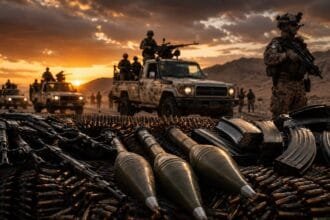
The Houthis’ military capabilities have undergone a significant transformation since they seized control of Sana’a. The U.S. Defense Intelligence Agency (DIA) indicates that the group has used missiles and drones of Iranian origin or design in attacks targeting military and civilian sites in the region. In a 2024 report, the DIA stated that since 2014, the Iranian Revolutionary Guard Corps (IRGC) has provided the Houthis with an increasing arsenal of advanced weapons and training, and that this assistance has contributed to the development of their ability to conduct missile and drone attacks. In another report, the DIA stated that between 2015 and 2024, the United States and its partners intercepted at least 20 Iranian smuggling vessels, seizing components for ballistic and cruise missiles, surface-to-air missiles, anti-tank missiles, drones, and other weapons destined for the Houthis.
What does the United Nations say about external support?
The reports of the UN Security Council’s Panel of Experts on Yemen provide one of the most important international sources for assessing the development of Houthi military capabilities. In its 2024 report, the Panel stated that testimonies gathered from military experts, Yemeni officials, and individuals close to the Houthis indicate that the group, without external support, lacks the capacity to develop and produce sophisticated weapons systems such as short- and medium-range ballistic missiles, cruise missiles, anti-ship ballistic missiles, anti-ship missiles, unmanned aerial vehicles (UAVs) and their launch and control systems, and maritime radar and surveillance systems. This assessment represents one of the most significant international pieces of evidence that the Houthis’ military development has not been solely the result of local capabilities.
Iran: The nature of the relationship
The relationship between Iran and the Houthis did not begin as a full-fledged military alliance, but rather developed gradually in tandem with the group’s expansion within Yemen. International reports indicate that Iranian support has included weapons, military components, training, and technical expertise. The US Defense Intelligence Agency (DIA) also confirms similarities between missiles and drones used by the Houthis and known Iranian systems. Evidence presented by the DIA suggests that some components of missiles and drones intercepted while being smuggled into Yemen possess characteristics almost identical to Iranian components and systems. Iran, for its part, rejects these accusations and submitted a formal response to the United Nations in January 2025, refuting the allegations made in the Panel of Experts’ report regarding its support for the Houthis.
Iranian support: a weapon or an integrated system?
The available indicators are not limited to the smuggling of ready-made weapons. US and UN reports speak of components, materials, technologies, training, and expertise that help the Houthis operate, develop, and produce some of their systems. The US Defense Intelligence Agency says that Iranian support has enabled the Houthis to launch more than 100 land and sea attacks using weapons of Iranian origin or Iranian components. The UN Panel of Experts report indicates that the weapons systems used by the Houthis have become more sophisticated, and that external support has been a key element in this development.
Bab al-Mandab: A strategic value that transcends Yemen
Geography gives the Houthis strategic importance that extends far beyond the territory they control. Their areas of influence stretch to the Red Sea coast, near Bab al-Mandab, one of the most important maritime chokepoints connecting the Red Sea to the Gulf of Aden and the Indian Ocean. With anti-ship missiles, drones, and naval systems, the Houthis can impact international shipping from land, without needing a large conventional navy.
Attacks on international shipping
Since November 2023, the Houthis have launched a series of attacks on commercial vessels in the Red Sea and the Gulf of Aden, linking their operations to the war in Gaza. The Security Council has demanded that the group cease attacks on commercial ships, emphasizing that targeting international shipping constitutes a threat to maritime security and global trade. In January 2025, the Security Council adopted Resolution 2768, which maintained the mechanism for reporting Houthi attacks on commercial vessels, condemned their continuation, and demanded that the group cease these attacks and release the crew of the vessel Galaxy Leader. Human Rights Watch stated that some Houthi attacks on civilian vessels in the Red Sea were indiscriminate and struck civilian targets, suggesting that some of these attacks may constitute war crimes.
Cross-border attacks
The Houthis’ military activity has not been confined to Yemeni territory. For years, the group has launched missile and drone attacks against Saudi Arabia, and later targeted the UAE, before expanding its operations to Israel and the Red Sea. The UN Security Council has included the Houthis in its sanctions regime against Yemen, citing the group’s involvement in attacks against civilians and civilian infrastructure in Saudi Arabia and the UAE, as well as attacks on commercial shipping in the Red Sea.
The Houthis and the regional war
The Houthis’ activities in the Red Sea have repositioned the group within the broader regional conflict. Attacks that began under the guise of supporting Palestinians in Gaza have transformed into a separate international issue concerning freedom of navigation and global trade, leading to US, British, and Israeli military interventions against Houthi positions in Yemen. Simultaneously, Washington and other countries have viewed Iranian support for the Houthis as part of a wider network of military partnerships that Tehran utilizes in the region. In June 2025, the UN Special Envoy to Yemen told the Security Council that Ansar Allah’s attacks on Israel and retaliatory strikes on Yemeni infrastructure continued, calling on all parties to protect civilians and civilian facilities.
Why is Iran a key element in the development of the Houthis?
Iran’s importance is evident on three main levels.
The first level relates to military capabilities, through the provision of weapons, components, technologies and training.
The second level relates to technical expertise, particularly in the field of missiles, drones, and naval capabilities.
The third level is related to the Houthis’ geographical location, as their control over areas in western Yemen provides Tehran with an armed partner close to Bab al-Mandab and the Red Sea.
Thus, the relationship became strategically valuable to both parties: the Houthis gained capabilities and expertise that helped them strengthen their power, while Iran benefited from having an armed ally in a geographically sensitive location for trade, energy, and maritime routes.
Are the Houthis entirely an “Iranian proxy”?
The description requires some accuracy. International documents confirm the presence of Iranian military and technical support for the Houthis, but they do not prove that the group lacks an independent agenda or that all its decisions come from Tehran. The historical basis of the group is Yemeni, and the conflict it waged against the Yemeni government preceded Iranian expansion in its relationship with it.
At the same time, the scale of the development in missile, drone, and naval capabilities cannot be easily explained as a purely independent, local development, as confirmed by reports from the United Nations and the US Defense Intelligence Agency. Therefore, a more accurate description is that the Houthis are a Yemeni force with a local agenda that has become a significant part of Iran’s regional network of partnerships and has benefited from Iranian support in developing its military and technological capabilities.
The Houthis are part of the Iranian pressure equation.
The group’s strategic value becomes more apparent when looking at its location within the regional map. Iran confronts its opponents through a network of allied forces in several arenas, and the Houthis give this network a geographical extension to the southern Arabian Peninsula and the Red Sea. This does not necessarily mean that every Houthi operation is carried out under the direct guidance of Iran, but it does mean that the group’s capabilities allow Tehran to have an additional card in the face of its regional and international opponents. The United States representative in the Security Council said in 2025 that Iran continued to provide weapons components, financial support, training, and technical assistance to the Houthis, considering that this support helped them carry out attacks that threaten freedom of navigation.
Violations: A separate issue from the relationship with Iran
In media coverage, it is crucial to distinguish between the issue of Iranian support and the issue of human rights violations. The existence of Iranian support for the Houthis does not mean that all violations committed by the group can be directly attributed to Iran. Conversely, the Houthis’ record of violations is independently documented by the United Nations and human rights organizations, and includes the arbitrary detention of civilians, torture, child recruitment, suppression of freedoms, attacks on civilians, and obstruction of aid. This distinction is essential to avoid conflating the group’s responsibility for its actions with the nature of the external support it has received.
Current scene
The Houthis enter this current phase with far greater combat experience than they had when they seized Sana’a in 2014. The group now possesses missile systems, drones, naval capabilities, and expertise in conducting long-range operations, in addition to controlling institutions and large swathes of Yemen. Meanwhile, the country remains politically and militarily divided, and the population is suffering from a profound humanitarian crisis.
The United Nations warns that continued regional escalation threatens to plunge Yemen back into widespread military operations, at a time when the peace process remains fragile. In July 2026, the UN warned of the risks of regional escalation to Yemen and international navigation as the conflict in the region intensified.