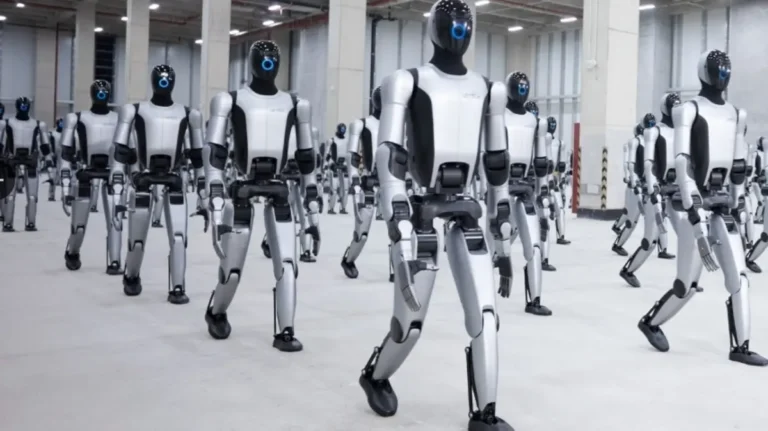
Beijing, China – Chinese companies solidified their dominance of the global humanoid robot market in the first half of 2026. They achieved an unprecedented surge by capturing over 97% of total global shipments. This accomplishment reflects China’s early technological and manufacturing advancements in this fiercely competitive technology race. It also far surpasses its US competitors.
Accelerated growth and three times the previous shipments
According to a recent report by the global research firm Smart Analytics Global, as reported by Bloomberg, global shipments of humanoid robots reached approximately 19,100 units in the first six months of this year. This figure represents more than three times the shipments recorded during the same period last year. Last year, shipments were limited to approximately 5,100 units. The research firm anticipates continued rapid growth in the market in the coming years. In addition, it also projects that total global shipments will reach approximately 60,000 robots by the end of 2026. Prior to that, the market is expected to experience a major surge. By 2030, shipments will reach approximately half a million units annually.
Agibot leads the way, while Chinese companies enjoy double dominance.
Data from the first half of 2026 revealed a significant shift in the landscape of the world’s largest manufacturers. Shanghai-based Agibot seized the top spot in the global market in terms of shipment volume. It surpassed its prominent domestic competitor, Hangzhou-based Unitree Robotics. Agibot alone accounted for 44% of total global humanoid robot shipments during the first half of the year. It shipped approximately 8,400 units in just six months.
In contrast, Unitree Robotics shipped approximately 5,900 units, securing second place. Combined, the two Chinese companies shipped roughly 14,300 robots, representing about 75% of total global shipments. These impressive figures far surpass the latest shipment volumes of leading US companies in the sector, including Tesla, Figure AI, and Agility Robotics. This underscores the remarkable speed at which China’s robotics manufacturing ecosystem is advancing.
Strategic shift towards industrial and commercial applications
The trend isn’t limited to the rapid increase in the number of units shipped; it also includes a qualitative shift in the way these machines are used. According to Linda Sui, founder and senior researcher at Smart Analytics Global, industrial and commercial applications accounted for more than 70% of total humanoid robot shipments during the first half of 2026. Last year, industrial and commercial uses accounted for only about 50% during the same period.
This success is supported by clear government policies and multi-tiered government funding in China. These policies aim to accelerate the transition of robots from laboratory and demonstration phases to large-scale, practical use. This priority was clearly demonstrated at the World AI Conference in Shanghai last month. There, dozens of companies showcased their latest innovations in mobility, speed, and operational skills.
US restrictions and geopolitical escalation
Conversely, this Chinese dominance is causing growing concern in Washington, especially as it comes at a time of heightened technological tensions between the two countries.
In late July, the United States imposed a formal ban on the import of new Chinese humanoid robots and quadrupeds, along with their associated components, citing national security and cybersecurity concerns. The US also fears the potential risks these technologies pose to America’s critical artificial intelligence infrastructure. These restrictions add a new geopolitical dimension to global competition, at a time when humanoid robots are gradually transitioning from futuristic innovations to a fundamental pillar in operational and production environments. As a result, this places the global industry at the forefront of a new phase of technological and economic conflict.