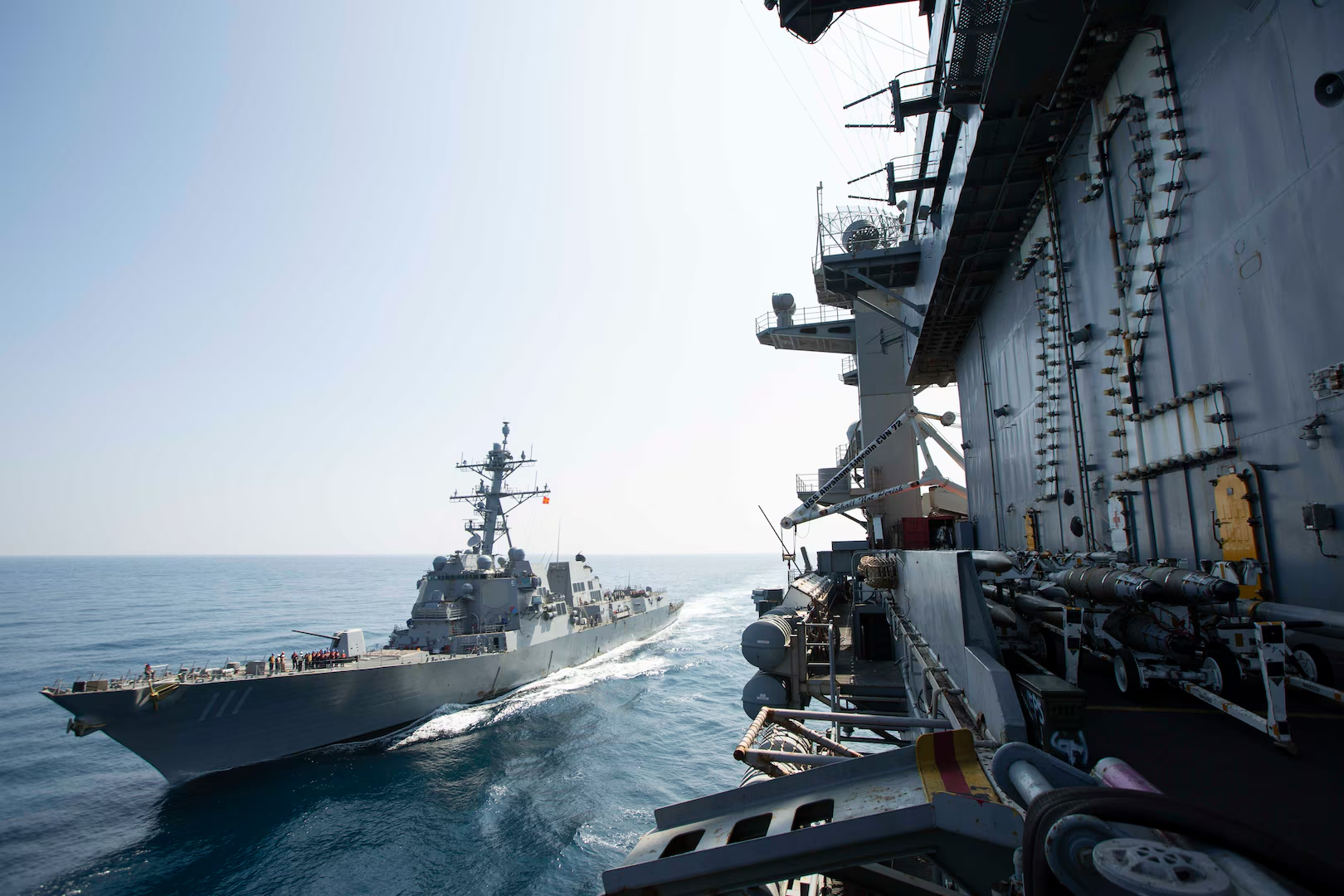
Berlin, Germany – The German Ministry of Defense announced that the minesweeper Fulda is ready to depart for the Mediterranean Sea,
a preliminary step towards participating in an international mission aimed at securing the Strait of Hormuz.
These movements come in the wake of the end of military confrontations between the United States and Iran.
International powers are seeking to ensure the flow of global trade through this strategic waterway,
through which approximately one-fifth of the world’s oil passes.
A strategic move within the framework of “NATO”
A spokesperson for the German Ministry of Defense explained that
the ship “Fulda” will be deployed within the next few days as part of NATO operations.
This initial deployment in the Mediterranean aims to “buy valuable time,”
allowing the ship to respond quickly and move as soon as final orders are issued.
The ministry emphasized that the primary objective is to make a significant contribution
to the international coalition seeking to protect freedom of navigation.
This comes particularly after the United States announced the commencement
of mine-clearing operations in the Strait of Hormuz, in coordination with Iran.
This information is still awaiting official confirmation from Tehran.
Berlin’s conditions for field participation
Despite ongoing logistical and administrative preparations at the port of Kiel, where the ship remains docked,
Germany has set strict legal and political conditions before the actual transit of the Strait of Hormuz.
The defense statement emphasized that the deployment of the
approximately 50-member crew to Hormuz depends on three key factors.
First, a permanent and comprehensive cessation of hostilities must be achieved.
Second, a solid foundation in international law is required to legitimize the mission.
Finally, formal authorization from the German parliament, the Bundestag, is necessary.
Expanding the European mission of “Aspedis”
For his part, German Defense Minister Boris Pistorius presented a legal framework for the mission,
suggesting the possibility of expanding the scope of the European Operation Aspidis,
launched in February 2024 to protect navigation in the Red Sea.
Pistorius deemed this option “appropriate and feasible” to provide the necessary international legal cover.
These efforts aim to mitigate the economic repercussions of the war that erupted on February 28th.
The region subsequently witnessed the closure of the straits
and a record surge in global energy prices as a result of the exchange of attacks and airstrikes.