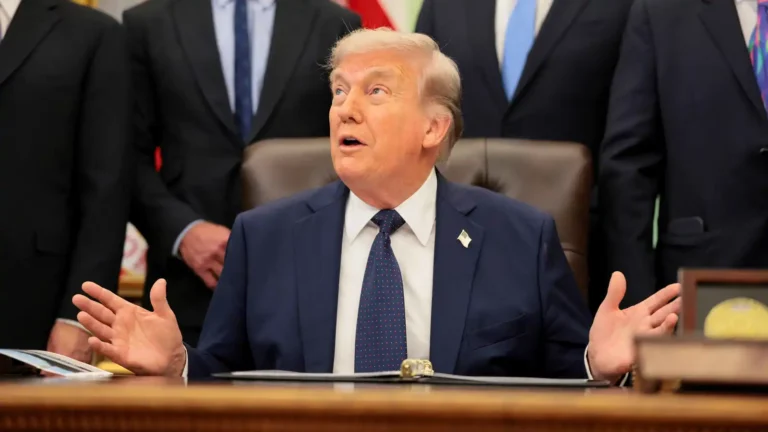
Washington, DC – In remarks reflecting Washington’s determination to tighten its grip, US President Donald Trump asserted on Wednesday that the Iranian regime is “incapable” of unifying its ranks or making crucial decisions.
Trump emphasized via his Truth Social platform that Tehran is not qualified to sign a “non-nuclear” agreement under the current mounting pressure.
He issued a direct warning to officials in Tehran, urging them to “get it right quickly.” Furthermore, he called on them to pursue a comprehensive settlement that would end their international isolation.
Trump used a state dinner he hosted at the White House for visiting monarch King Charles III to emphasize the existence of a high-level international consensus on the Iranian issue.
“We are doing very well in the Middle East right now,” Trump declared to the attendees. “We have defeated that adversary militarily, and we will never allow them to have a nuclear weapon.” He added confidently, “King Charles agrees with me on this point even more than I do.” While the British monarch remained silent on these political matters, in accordance with his country’s protocol, Trump’s remarks conveyed a clear message. They demonstrated a united Western front against Tehran’s nuclear ambitions.
Concurrently with these statements, The Wall Street Journal, citing US officials, revealed that President Trump had instructed his aides to prepare for a “long-term blockade” of Iran. The report explained that Trump had concluded that resuming military strikes or a sudden withdrawal carried risks. He believed that maintaining the current pressure campaign was less dangerous.
The White House believes the current blockade of the Strait of Hormuz is already bearing fruit, as it is “crushing” the Iranian economy and creating significant difficulties for the regime in storing unexported oil.
Officials confirmed that Trump is not prepared to back down from his core demand: an explicit Iranian commitment to suspend uranium enrichment activities for at least 20 years.
These developments indicate a shift in US strategy toward “cold attrition.” Instead of direct military escalation, Washington seeks to strangle Iran’s financial resources to force it to accept harsh terms. These terms go beyond previous agreements, plunging the Middle East into a new phase of economic confrontation, no less intense than military operations.