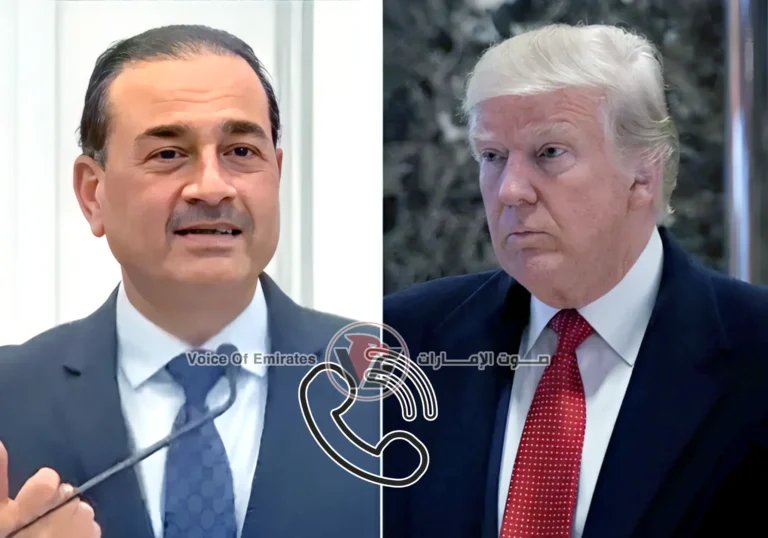
Islamabad, Pakistan – In a significant diplomatic and military development, Pakistani media revealed a direct telephone call between US President Donald Trump and Pakistani Army Chief General Asim Munir.
The call focused primarily on ways to de-escalate tensions in the Strait of Hormuz and the future of the ongoing conflict with Iran.
This direct communication comes at a sensitive time and is part of intensified efforts preceding the announcement
by Washington and Tehran of concrete steps to reduce tensions and reopen waterways for international shipping.
Security coordination and maritime corridors
Newspaper reports and local channels in Islamabad indicated that the call focused in depth on developments in the US-Iran conflict.
There was a particular emphasis on security arrangements for maritime routes in the Persian Gulf.
ources confirmed that Trump sought, through this call, to acknowledge the role
of the Pakistani military establishment in facilitating understandings between the two sides.
This coincided with political contacts the US president made with Pakistani Prime Minister Shehbaz Sharif.
These contacts aimed to ensure coordination of positions at all levels.
Pakistan’s military mediation
The contact was not merely a protocolary gesture, but rather the culmination of field
and diplomatic efforts led by General Assem Munir himself.
According to reports, Munir acted as a “trusted mediator” through a strategic visit to Tehran,
where he met with senior Iranian leaders to convey messages of de-escalation.
Furthermore, he held intensive and ongoing consultations with senior officials in the US administration, most notably Vice President J.D. Vance.
These consultations aimed to develop a roadmap that would ensure the reopening of the Strait of Hormuz without imposing unreasonable conditions.
Crisis management and navigation guarantees
These moves highlighted Pakistan’s pivotal role as a bridge in the region, leveraging its balanced relationships with major and regional powers.
Observers believe that Trump’s direct call to the army chief reflects Washington’s awareness of Islamabad’s military weight.
It also demonstrates Pakistan’s ability to provide security guarantees
that contribute to the stability of international trade through one of the world’s most vital waterways.
These developments confirm that the recent understandings regarding the Strait of Hormuz were not coincidental.
Rather, they were the result of a diplomatic “surgical” operation led by regional actors to
avert the risk of sliding into a comprehensive and devastating confrontation for the global economy.