Dubai, UAE – The Semafor website published an opinion piece by Tariq Al-Otaiba, a fellow at Harvard University’s Belfer Center, stating that the UAE has thus far demonstrated a combination of strong defensive capabilities and restraint in dealing with missile and drone attacks. He emphasized, however, that Abu Dhabi might resort to “demonstrating its offensive capabilities” if the targeting of civilians continues.
The article’s author noted that the indiscriminate bombing of civilian targets in the Gulf states contradicted analysts’ expectations. They had predicted that any retaliatory strike would focus on American bases in the region.
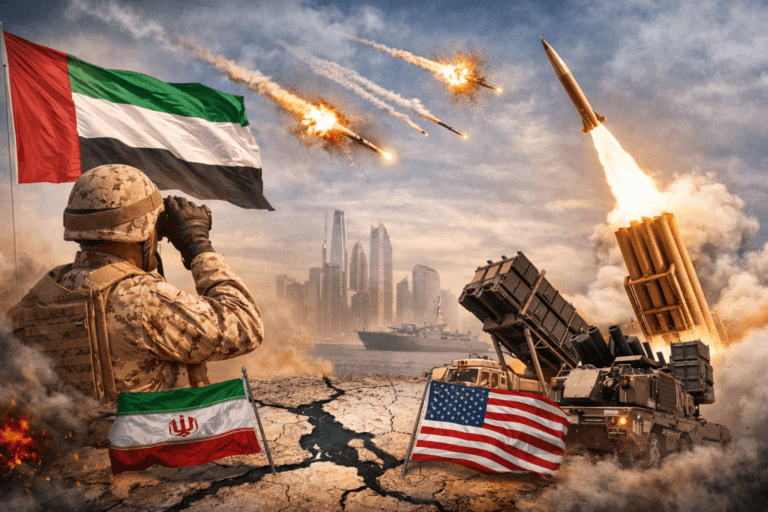
The writer stated that the UAE was subjected to over 700 ballistic missiles, cruise missiles, and suicide drones during the first two days of the confrontation. He also noted that casualties were limited.
Multi-layered air defense
The article attributed the UAE’s defensive effectiveness to its reliance on a “multi-layered” air defense network. This network includes systems such as the American THAAD and Patriot, the Barak-8, the Pantsir-S1, and the Cheongung II, in addition to a locally developed system.
The writer noted that, as of March 1st, the UAE’s missile interception rate had reached 95%. The army announced the destruction of all missiles that penetrated its territory and 94% of the more sophisticated drones. This is a remarkable achievement by any standard, comparable to the 90% success rate of Israel’s Iron Dome system.
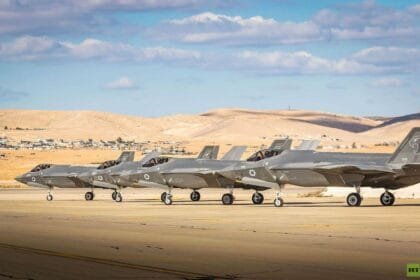
The author stated that the UAE‘s offensive capabilities far surpass those of its Iranian counterpart. The Iranian air force lags behind Abu Dhabi’s fleet by generations. In addition to its combat prowess, the UAE has demonstrated its ability to project power in past conflicts, thanks to its aerial refueling capabilities.
Abu Dhabi’s capabilities extend beyond simply responding; it can also sustain a prolonged fight. Military experts rank the UAE as the strongest Arab military power and the second strongest in the region after Israel. Its armed forces, particularly the Presidential Guard and the Joint Air Command, operate at NATO-level standards.
The right to self-defense and the possibilities of expanding the alliance
The article noted that Abu Dhabi is currently showing restraint, but argued that continued attacks on civilians and disruption of global trade could lead to international escalation. It also pointed to European positions indicating a willingness to participate in offensive action against missile and drone launch sites if attacks on Gulf states persist.
Official Emirati position
The UAE Ministry of Defense announced on February 28, 2026, that the country had been attacked by Iranian ballistic missiles. It confirmed that its air defense systems dealt with the threat effectively and successfully intercepted a number of missiles. The Ministry also urged the public to obtain information from official sources and avoid spreading rumors.