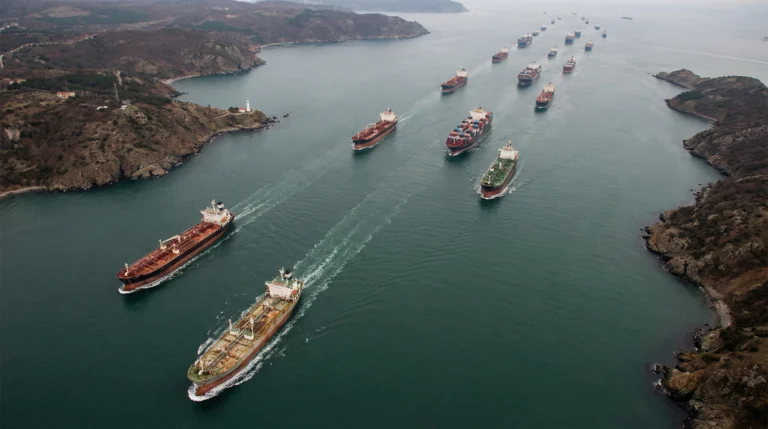
Tehran, Iran – In an international effort to secure maritime navigation, the United Nations Maritime Organization (IMO) announced that 57 vessels successfully transited the Strait of Hormuz between June 23 and 25 as part of its evacuation plan. According to the IMO, this convoy included approximately 1,100 sailors who were safely evacuated from the area.
South Korean efforts to secure the remaining ships
In a related development, South Korea’s Ministry of Oceans and Fisheries announced that five vessels operated by Korean companies have already left the strait, with one heading towards Korean ports. The ministry also revealed that 13 other Korean-owned vessels with 87 crew members remain in the area, and confirmed that Seoul is currently engaged in intensive negotiations with the relevant countries to ensure the safe and stable exit of the remaining vessels.
Washington: The Strait of Hormuz is an international waterway and does not belong to anyone.
For his part, US Secretary of State Marco Rubio emphasized the United States’ unwavering stance on freedom of navigation, affirming that the Strait of Hormuz is an international waterway not under the control of any single nation, and stressing that imposing transit fees there is “unacceptable.” Rubio asserted that the US will not allow the strait to fall under the sovereignty of any one party, and expressed his eagerness to work closely with the Gulf states to promote stability in the region.
Developments in the nuclear file and upcoming talks
Regarding the negotiations with Tehran, Rubio indicated that the preliminary agreement aims to ensure that Iran does not acquire nuclear weapons, while safeguarding the interests of Washington’s allies. The two sides signed a memorandum of understanding last week, mediated by Pakistan and Qatar, giving them 60 days to reach a final agreement.
The US Secretary of State explained that a new round of technical talks would resume in Switzerland on June 29 and 30. Despite these diplomatic efforts, significant gaps remain on contentious issues, including the future of the Strait of Hormuz and Iran’s nuclear program, amid domestic political pressure in the United States demanding a review of the negotiation process and criticizing the nature of the proposed concessions. The international community remains on tenterhooks awaiting the outcome of the upcoming talks, hoping to avert further escalation in the region.