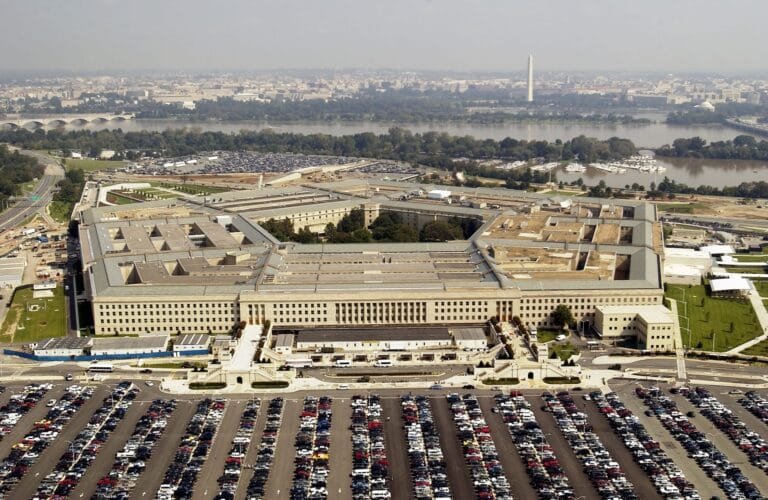
Washington – United States — US media reports have confirmed that the US Department of Defense (The Pentagon) is grappling with compounding and acute financial strains this fiscal year, driven by a record surge in fuel prices and expanding, unforeseen operational expenditures. Consequently, the US Army leadership has been forced to implement austere countermeasures, reducing dozens of core military training programs due to a massive budgetary deficit estimated between $4 billion and $6 billion.
Spike in Oil Barrel Benchmarks and Added Logistical Burdens
Official data compiled by ABC News revealed that the average fuel price paid by the Pentagon spiked sharply from $154.14 per barrel in October to $195.72 in April, registering an unprecedented increase of nearly 27% within a mere six-month window. This exponential jump has directly accelerated structural imbalances within the armed forces’ active operational budgets.
According to technical reviews, the compounding escalation of petroleum and fuel prices throughout the war in Iran added more than $1 billion in unplanned, unbudgeted expenditures this year alone. This comes at a critical juncture when the US military relies strategically on an estimated 80 million barrels annually to propel fighter jets, combat tanks, and various heavy tactical hardware. Furthermore, logistical sources pointed out that a parallel surge in commercial travel expenditures, civilian airfares, and fleet vehicle rentals has intensified the added financial strains, prompting military commanders to launch a thorough re-evaluation of personnel transit linked to training and external logistical missions.
Cancellation of Specialized Drills and Dropping Readiness Threaten Other Branches
Internal reports clarified that the military institution was structurally compelled to downsize dozens of field training blueprints. This included vital specialized coursework within military medicine, combat engineering, and artillery divisions. Additionally, helicopter and air wing flight hours have been sliced to the critical baseline minimum mandatory to sustain core operational readiness. Defense officials confirmed that multiple units and battalions have completely scrubbed or significantly downscaled field training maneuvers since last April. This is part of an emergency contingency plan drafted to curb runaway expenses.
Analyses indicate that the repercussions of the ongoing energy crisis are not isolated to ground forces. The US Navy is confronting identical operational and financial pressures that could disrupt maneuver calendars and warship deployment readiness. This friction is exacerbated by the high costs of maintaining a multi-front presence, particularly inside the volatile Middle Eastern theater. High-ranking military officials warned that a sustained upward trajectory in energy markets could trigger further, more stringent constraints on operations and drills in the coming months. As a result, there is a potential risk of undermining intermediate-class force readiness.
Conversely, a spokesperson for the US Marine Corps stated that the Marines have not yet encountered a comparable acute financial deficit or a sweeping contraction in their scheduled maneuvers, despite their active participation in reallocating emergency spending profiles to cushion shifting geopolitical and operational shocks. These highly sensitive defense dynamics manifest at a historical juncture when global energy sectors are witnessing sharp, erratic volatility, heavily complicating the administration of US defense allotments alongside Washington’s expanding international military commitments worldwide.