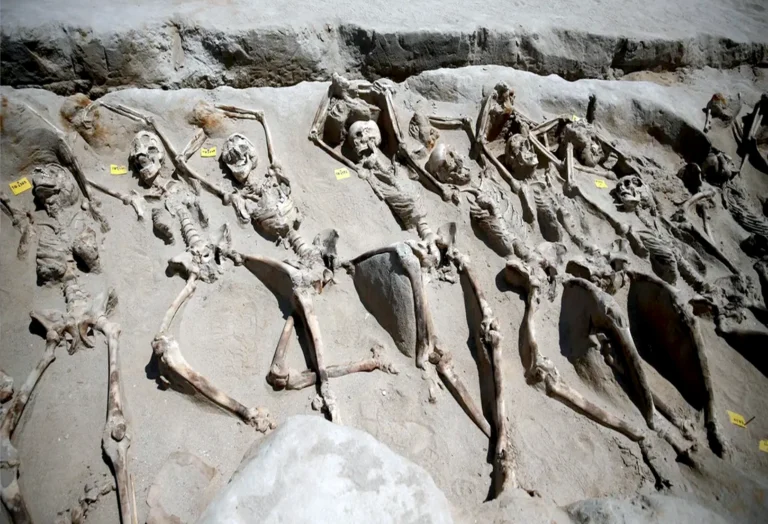
Athens, Greece – Archaeological excavations have unearthed a mass grave containing dozens of bodies found in unusual positions, some with their hands bound.
The discovery, dating back more than 2,600 years, has raised numerous questions
about the circumstances surrounding the deaths of these individuals and the reasons for their burial in this manner.
Human remains belonging to victims of conflict or prisoners
Archaeologists and researchers are trying to determine whether the human remains belong to victims of conflict,
prisoners of war, or individuals subjected to collective punishment.
The burial methods and the restraints found on some of the skeletons suggest exceptional circumstances,
not in keeping with traditional burial practices of that era.
The discovery is particularly significant because it provides physical evidence
that can help in understanding the nature of violence and social practices in ancient societies.
It also allows researchers to study injuries and the marks left by restraints.
Furthermore, they can investigate how the bodies were arranged within the site.
Violent events occurred two thousand years ago
While archaeological evidence may offer some answers, identifying the victims
and the precise cause of their deaths still requires further scientific analysis.
This analysis includes examining bones and studying the marks of injuries and restraints.
The findings are also compared with available historical records.
This discovery brings back to the forefront questions about violent events that occurred
more than two thousand years ago, details of which remained buried for centuries.
Researchers hope that future analyses will reveal more secrets about the fate of
these men and the circumstances that led them to this mass grave.