Occupied Jerusalem — The Israeli army has announced the urgent activation of sirens and early warning systems across the settlement of “Zar’it” and its immediate sectors along the western flank of the northern border. This immediate tactical reaction unfolded after radar arrays and air defense screens detected what military officials categorized as the infiltration of a drone crossing over from Lebanese territory, pushing the border zone into a state of high combat readiness.
Deployment of Warning Systems and Radar Interception Assets
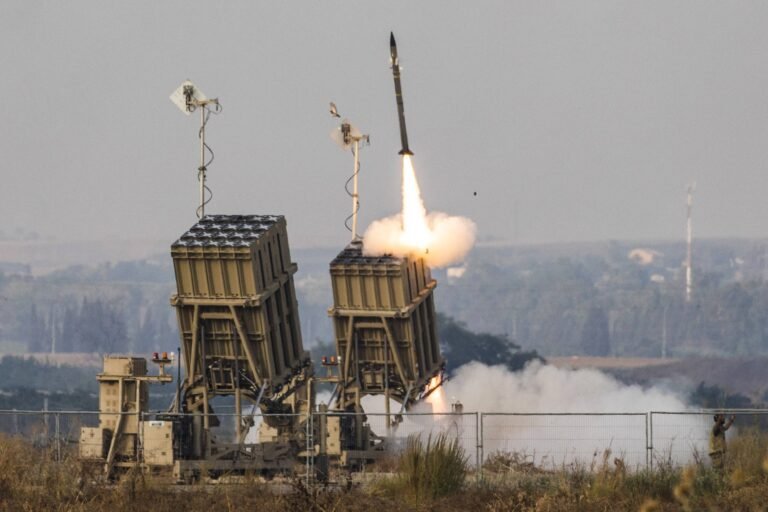
The Israeli military spokesperson clarified in a brief communique that the early warning network was triggered immediately upon detecting the hostile aerial target breaching the Blue Line. He noted that specialized air force units and ground-based defense echelons instantly initiated physical tracking of the asset’s trajectory on the ground, mobilizing necessary defensive and interceptive protocols to neutralize the aerial threat and prevent it from loitering above sensitive infrastructure.
The military’s Northern Command emphasized that the precise tracking operation materialized within the framework of continuous surveillance and uninterrupted aerial mapping of the border with Lebanon. Officials added that the technical details regarding the unmanned aerial vehicle’s (UAV) flight path, operational altitude, and the core strategic mission it was designed to execute remain under thorough review and analysis by intelligence and security frameworks.
Military Mobilization and Deepening Friction on the Northern Front
The activation of sirens precipitated a wide-scale military and security mobilization across all frontier towns and administrative zones adjacent to Southern Lebanon. At the same time, instructions were distributed to residents to exercise high vigilance. Simultaneously, Israeli fighter jets and reconnaissance helicopters sustained intensive clearing operations and visual tracking sweeps. This aimed to guarantee the neutralization of the threat. It also helped verify the absence of secondary aerial vectors or companion drones in the airspace.
This critical field development manifests within the context of chronic security frictions and mounting military escalation along the shared borders between Lebanon and Israel. The northern front routinely witnesses recurring security incidents tied to drone deployments and airspace violations. It also frequently sees cross-border exchanges of artillery and rocket fire between the Israeli army and armed factions deployed in Southern Lebanon. Up to the writing of this report, no official commentary or claim of responsibility has emerged from the Lebanese side concerning the aerial dispatch. Meanwhile, the Israeli military continues to evaluate the tactical environment and update surrounding security developments.