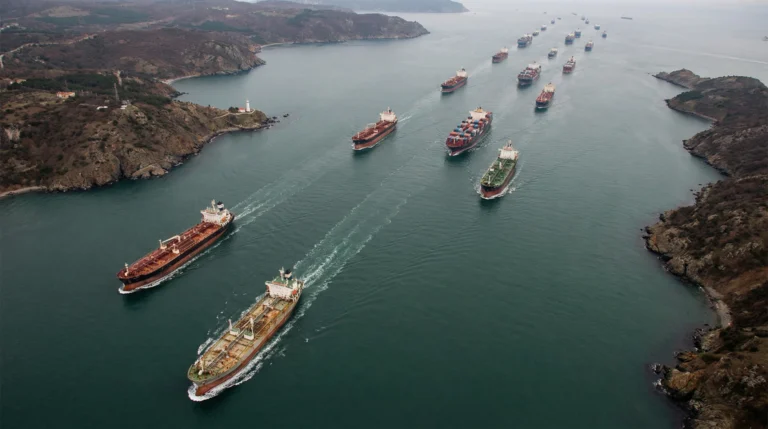
Washington, DC – In a move highlighting escalating tensions in one of the world’s most vital waterways, The Wall Street Journal reported that several commercial vessels have begun taking unusual security measures to transit the Strait of Hormuz.
These measures include switching off their GPS navigation systems and moving in near silence. This is being done in close strategic coordination with the US military to deter any potential attacks by Iran.
Tactics to evade targeting
The newspaper noted that this tactic, described as a “dark passage,” is a direct response to the growing risks facing international shipping in the Strait of Hormuz.
By switching off their transponders, these vessels attempt to evade Iranian monitoring systems and avoid detection by Iranian warships or drones. These drones have previously targeted commercial vessels in the region under various pretexts. Furthermore, this operation is conducted under the close supervision of the US Navy, which provides security guidance to the transiting vessels. It also coordinates their passage times to ensure security coverage and a naval presence to protect them in case of any harassment.
strategic implications
This revelation comes at a time of heightened military and diplomatic activity in the Gulf region, as the Trump administration seeks to secure global energy routes and prevent any Iranian attempts to disrupt shipping.
The ships’ resorting to switching off their tracking systems is a dangerous indicator of a loss of confidence in the ability of international law alone to protect vessels. This imposes a new security reality that necessitates “shadow warfare” tactics.
Observers believe this silent transit is not merely a technical procedure, but a clear message that the Strait of Hormuz has become an open battleground. Shipping companies are now forced to take extraordinary measures to counter the existential threats to their interests, given the continued diplomatic failure to reach an agreement that guarantees regional stability.
As these operations continue, concerns are mounting that any miscalculation of distances or coordination could lead to an unexpected military clash in the world’s most sensitive oil shipping lane.