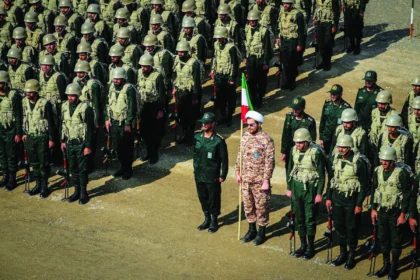
Tehran, Iran – The Iranian Army’s Public Relations Department announced on Wednesday that the 388th Mechanized Infantry Brigade of the Ground Forces in Bampur County, Sistan and Baluchestan Province, was subjected to an intense missile attack that resulted in the death of seven soldiers and the injury of others.
Details of the attack
The army statement explained that the attack occurred this morning, with 13 rockets targeting facilities within the garrison, including a clinic, a guesthouse, and guard posts. The statement confirmed that the seven fatalities were from the regular and recruiting forces. It also indicated that evacuation and investigation operations are underway.
Conversely, reports from local sources and regional news outlets regarding the final toll were conflicting. The news website Halash, citing eyewitnesses, reported that the explosions were massive, resulting in severe injuries. It also suggested that the death toll could exceed 10 soldiers, with at least 15 wounded being transported to hospitals. The Aftab News website, citing sources in Iranshahr, estimated that the number of injured could reach 50.
Context of military escalation
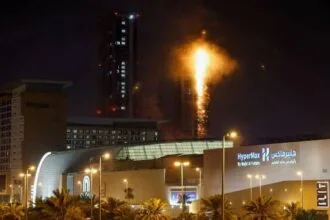
This attack comes amid escalating regional security tensions. It coincides with a series of attacks across the region in recent hours, including strikes targeting sites in Gulf states. Additionally, the Jordanian Armed Forces confirmed intercepting missiles that attempted to penetrate its airspace.
This development represents a direct escalation in the military confrontation between the United States and Iran. It expands the scope of targeting to include military installations deep inside Iran. Furthermore, the nature of the targeting reveals a shift in US military tactics, as it now employs precision missiles to strike strategic targets.
While Tehran officials typically refrain from disclosing precise figures for casualties in such attacks, the scale of the bombing and the numerous local sources reporting higher numbers of dead and wounded reflect a state of high alert in Sistan and Baluchestan province. These developments on the ground come amidst ongoing intensive international diplomatic efforts, particularly the recent Jordanian-American talks in Washington, which aimed to manage the regional escalation and explore de-escalation mechanisms. This occurs against a backdrop of fears that the region could be drawn into a full-blown confrontation with unpredictable consequences.