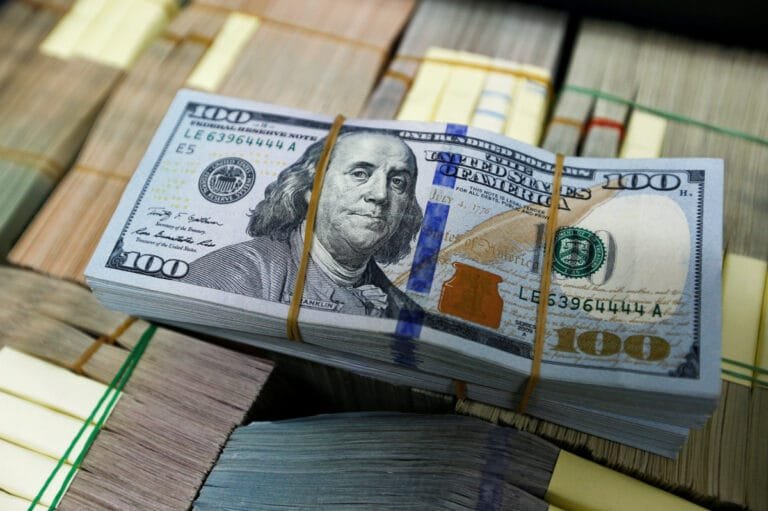
Washington, DC – The dollar weakened on Wednesday, retreating from its highest level in two weeks. This followed the release of weaker-than-expected US inflation data, which bolstered expectations that the Federal Reserve would hold interest rates steady. However, markets remained concerned about rising oil prices due to the escalating military tensions in the Gulf region.
The dollar weakened and inflation slowed.
Data showed that annual US consumer price inflation slowed to 3.5% in June, below market expectations. The Consumer Price Index also fell 0.4% month-on-month, marking the first decline since April 2020, primarily driven by lower energy prices.
In currency markets, the dollar fell 0.1% to 162.08 against the yen. Meanwhile, the euro and the British pound both rose 0.1%, trading at $1.1433 and $1.3401 respectively. The dollar index, which measures the currency’s performance against a basket of six major currencies, also declined to 100.81.
Interest rate path and Fed statements
This data led to a decline in US Treasury yields and a decrease in market expectations for an interest rate hike. CME Group futures indicate a drop in the probability of a rate increase to just 16%. However, Federal Reserve Chairman Kevin Warsh left the door open to all possibilities. He affirmed before Congress that the central bank “will not tolerate” high inflation and will continue its work despite any political pressure.
The impact of geopolitical tensions on oil
Despite market optimism regarding inflation data, inflationary pressures remain due to oil prices reaching their highest level in a month. This surge was fueled by the recent escalation in the region, with the US president reimposing a naval blockade on Iranian ports. This coincided with a new round of US military strikes aimed at weakening Iranian capabilities used to threaten shipping in the Strait of Hormuz.
In this context, Samara Hammoud, an expert at the Commonwealth Bank of Australia, explained that a single inflation reading does not determine the course of interest rates. She also noted that markets are awaiting today’s producer price data. In Asia, China’s economic growth slowed to 4.3%. Meanwhile, the yuan saw a slight rise in anticipation of stimulus measures from Beijing. While Sim Moh Seong of OCBC Bank expects the dollar to remain under pressure in the near term, the global economic landscape remains suspended between US inflation data and the risk of an escalation of the military conflict in the Gulf region.