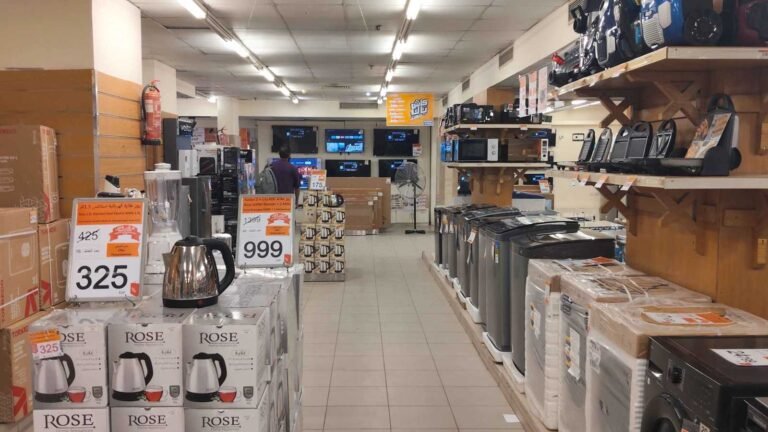
Tehran, Iran – The Iranian market for household appliances is experiencing a severe recession due to an unprecedented wave of inflation. The latest report from the Iranian Statistical Center for June 2026 revealed that this category of goods recorded the highest annual inflation rate in the country, reaching 111.1%.
Collapse in sales and production
The Association of Home Appliance Retailers confirmed that sales in the sector have plummeted by more than 40% this year, while production has declined by 38% compared to the previous two years. Figures show that Iranian families are now paying more than double what they spent last year for the same goods. As a result, 90% of families have opted to repair their old appliances instead of purchasing new ones.
Record price jumps
The severity of the crisis is evident in annual price comparisons. Side-by-side refrigerators: their price jumped from 140 million tomans in June 2025 to over 260 million tomans in June 2026. The price of an Iranian-made washing machine jumped from 35 million tomans to 80 million tomans. Vacuum cleaners rose from 4 million to 26 million tomans, and gas stoves from 7 million to 50 million tomans. Industry activists attribute this exorbitant increase to the reliance of production on imported raw materials and parts. Furthermore, exchange rate fluctuations have led to sharp increases of up to 130,000 tomans, directly doubling production costs.
General inflation and erosion of purchasing power
The household appliance crisis comes at a time when the Iranian economy is suffering from widespread inflationary pressures. The country’s annual inflation rate reached 62%, while the annual inflation rate for all goods and services reached 88.6%. Data from the Statistical Center indicates that low-income groups are the hardest hit, with the inflation rate for the lowest income bracket exceeding 100%. Other categories also recorded record increases, such as tobacco, which saw a point inflation rate of 173.8%, and food, which reached 134%.
These indicators reflect the widening gap between citizens’ income and the cost of basic living. This gap places immense pressure on the purchasing power of Iranian families, transforming household appliances—once considered essential consumer goods—into expensive and scarce items. This, in turn, exacerbates the recession plaguing both the manufacturing and retail sectors.