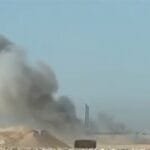
Tehran, Iran – In a bloody escalation of the already dire crisis, an Iranian health ministry official announced Wednesday morning that two women were killed and more than 260 people were injured as a result of intensive US airstrikes targeting various Iranian sites. The toll announced by the Iranian health ministry follows reports that the US military targeted an Iranian army base in the Bambaur district of Sistan and Baluchestan province. Initial reports also indicated a large number of casualties, both dead and wounded.
Expanding the scope of US strikes
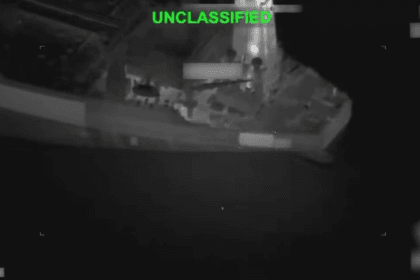
For its part, the US Central Command (CENTCOM) announced the completion of a new and intensive round of attacks against Iranian targets. A CENTCOM statement explained that the military operations lasted approximately seven hours and concluded at 5:30 AM local time. The attacks targeted dozens of critical military sites in the vicinity of the Strait of Hormuz and along the Iranian coast. According to the statement, fighter jets, drones, and naval vessels were employed. These forces targeted Iranian missile sites, drone launch pads, naval capabilities, and coastal defense systems. Furthermore, precision-guided munitions were used to ensure the neutralization of these capabilities.
Trump: “The strikes will continue and next week will be worse.”
These developments on the ground coincide with a sharp escalation in rhetoric from US President Donald Trump, who confirmed in an interview with Fox News that military operations against Iran would continue with even greater intensity. Furthermore, Trump promised that Tehran would experience “very hard strikes” tonight and tomorrow night. He also warned that the situation on the ground would worsen over the next week unless an agreement is reached to end the crisis.
These developments indicate that the conflict has entered a highly dangerous phase. Furthermore, the intensity of US air operations is escalating, expanding to encompass wider geographical areas within Iran, thus increasing the human and material cost. Moreover, these developments are pushing the entire region to the brink of open confrontation. Meanwhile, Washington insists on maintaining a course of intensified military pressure while simultaneously continuing back-channel negotiations. However, these negotiations have not yet yielded any tangible de-escalation on the ground.