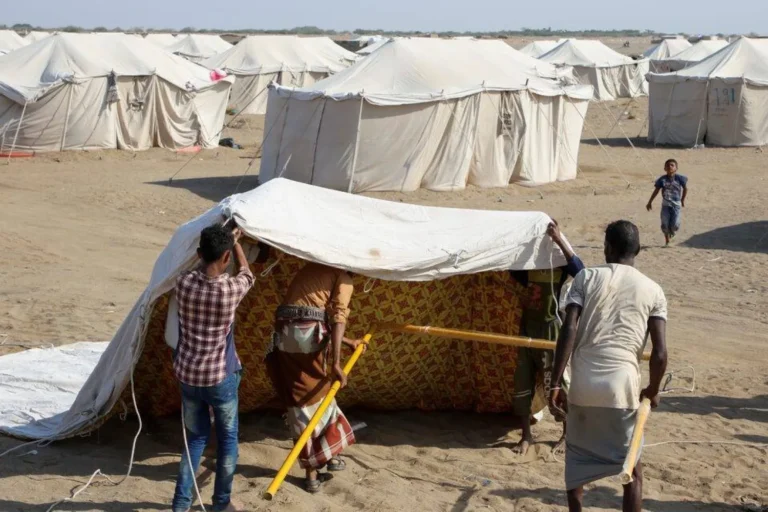
Aden, Yemen – The United Nations reported that approximately 1,790 Yemeni families were displaced in two days following an escalation of fighting in Taiz Governorate, in the southwest of the country. This escalation came after a military offensive by the Houthi group and its repeated shelling of populated areas and camps for internally displaced persons (IDPs). A report issued by the UN Office for the Coordination of Humanitarian Affairs (OCHA) stated that renewed clashes and artillery shelling since dawn on September 3, 2026, along the front lines in the districts of Maqbana and Jabal Habashi, led to widespread displacement. The report explained that families moved within the two districts or reached Al-Ma’afer, Ash-Shamayatayn, Mawza, and Adh-Dhubab. Furthermore, entire IDP camps, such as Al-Hajab and Ar-Rajhi, were evacuated, while some families remain trapped in areas of active fighting.
Government appeal for help and urgent humanitarian response
In the same context, the Yemeni government issued an urgent appeal to international and regional organizations due to the rapidly deteriorating humanitarian situation resulting from the Houthi escalation in Taiz and Hodeidah. The Yemeni Ministry of Planning and International Cooperation indicated that residential areas and shelters in the districts of Mocha, Maqbana, Jabal Habashi, Mawza, Al-Ma’afer, Al-Wazi’iyah, and Dhubab, as well as the districts of Al-Khawkhah and Hays, have been targeted, leading to widespread forced displacement. The most urgent humanitarian priorities include providing emergency shelter, food baskets, medicine, and establishing field hospitals. Other priorities include providing safe drinking water and sanitation services.
UN calls for coordinated efforts and safe access
The Yemeni Ministry of Planning called on all international and UN organizations, humanitarian partners, and donors to implement a rapid response. It also urged coordination of efforts with government agencies and local authorities. The Ministry further stressed the urgent need to ensure safe and unconditional access for relief aid, medical supplies, and healthcare personnel to the affected areas. This aims to alleviate the suffering of displaced civilians.