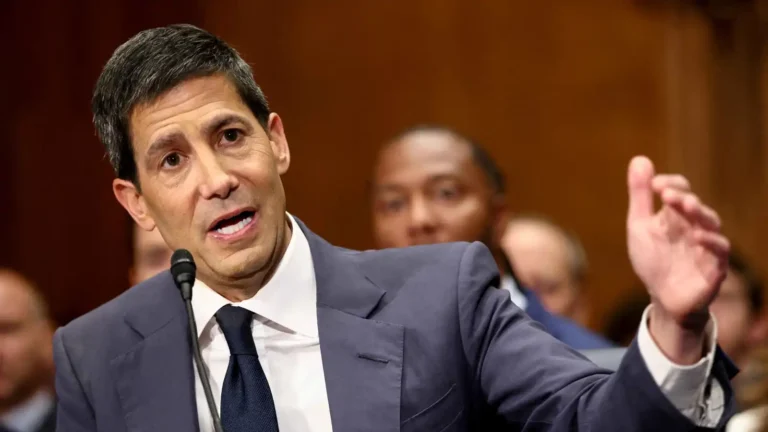
Washington, DC – Kevin Warsh was sworn in as the new chairman of the US Federal Reserve (the central bank) on Friday at the White House, officially assuming leadership of monetary policy for the world’s largest economy. This move comes amid a highly complex and tense economic climate, overshadowed by escalating wars and unrest in the Middle East and their direct repercussions on global markets, particularly with renewed concerns about further spikes in inflation rates due to disruptions in energy supplies and freedom of international navigation.
A historical precedent that sparks controversy over independence
The US Senate confirmed Warsh’s appointment earlier this month, following a direct nomination by President Donald Trump. Today’s swearing-in ceremony carries significant political weight.
This marks the first time since former President Ronald Reagan that a Federal Reserve chairman has been sworn in at the White House in the presence of the president, a move likely to fuel criticism from opponents and analysts who accuse Warsh of lacking independence and being subservient to the current administration’s policies.
President Donald Trump has made no secret of his desire to exert influence over the Federal Reserve’s decisions. He has consistently pushed for sharp interest rate cuts to bolster economic growth, while also launching scathing attacks on outgoing Fed Chair Jerome Powell, accusing him of inaction. Trump believes that monetary policy should align with and support his political and economic agenda, which aims to accelerate trade and industrial growth.
Warsh adheres to integrity and an independent monetary policy.
In contrast, Kevin Warsh defended his integrity during a Senate hearing on April 21, asserting that he presents himself as a completely “independent” official and has made no prior commitments to Trump regarding interest rates, emphasizing that “independent monetary policy remains an absolute necessity” to protect the economy, while downplaying the impact of political pressures.
Jerome Powell’s exceptional move signals internal conflict
In an exceptional development that breaks with established norms, former Federal Reserve Chairman Jerome Powell announced that he will continue to occupy his seat as a member of the Federal Reserve Board of Governors, justifying his decision by citing intense political and legal pressure from the Trump administration. Powell’s remaining term allows him to stay in office until January 2028, which signals rounds of conflict within the Federal Reserve.