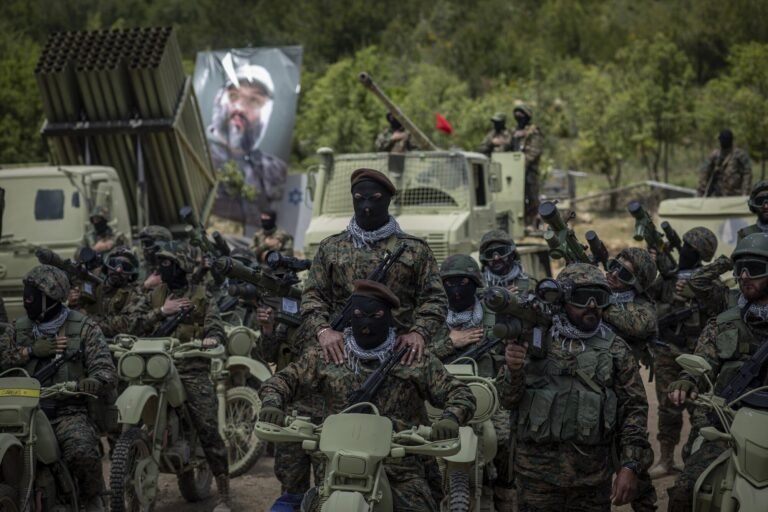
Beirut – In a violent new round of military escalation, the southern Lebanese front has ignited following a series of “precision” attacks launched by Hezbollah against Israeli military gatherings and vehicles. Obviously, by May 2026, the confrontations have bypassed traditional rules of engagement. Hezbollah utilized guided missiles and kamikaze drones to secure direct hits on Israeli positioning points, triggering a fierce Israeli artillery and aerial response that struck multiple border areas amidst international fears of the situation spiraling out of control.
“Direct Hits”: Behind-the-Scenes Field Operations and Counter-Response Scenarios
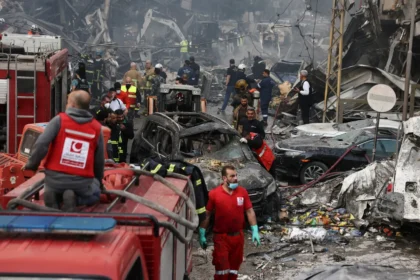
Hezbollah announced in an official statement that its fighters targeted military movements and vehicles behind the front lines, confirming the destruction of several units. Accordingly, Israeli forces launched intensive airstrikes and artillery shelling targeting the outskirts of Lebanese towns in an attempt to silence the sources of fire. Clearly, the intensity of the clashes has forced southern hospitals to raise their alert levels to the maximum, coinciding with the closure of main roads as the border area transforms into a closed military zone under the weight of mutual bombardment.
“The Brink of the Abyss”: Can Diplomacy Curb an All-Out Conflict?
Observers believe the continuous exchange of strikes places the entire region on the “brink of a volcano,” especially as civilian displacement begins from villages near the line of contact. As a result, international diplomatic efforts are racing to impose a temporary truce to prevent these strikes from evolving into a “total war.” In this complex landscape, the field remains the final arbiter; any miscalculation by either side could ignite a major confrontation that may not stop at the borders of Southern Lebanon.