
Dubai, UAE – U.S. President Donald Trump said on Sunday, May 3, 2026, that the United States would begin escorting ships through the Strait of Hormuz starting Monday morning, Middle East time. He described the move as aimed at ensuring vessels can safely leave the sensitive waterway. In addition, it will allow them to continue their operations.
Watch a short ad to continue reading this article.
Rewarded ad is not available right now. Please try again shortly.
Trump announced in a post on his “Truth Social” platform that the operation would be called “Project Freedom.” He noted that “countries from around the world” had asked Washington to intervene. These countries want help for their ships that were stranded or affected by restrictions on navigation in the area.
According to the Associated Press, the U.S. move comes amid an ongoing navigation crisis in the Strait of Hormuz. In this context, tensions linked to Iran have disrupted the movement of several ships. They have also raised growing concerns among shipping and energy companies about the safety of passage through the waterway.
Trump said Washington had informed the countries concerned that it would guide their ships safely out of “these forbidden waterways,” as he put it. He added that the goal was to allow vessels to resume their activities “freely and efficiently.” The announcement carried both a security message and a political warning. The U.S. administration seeks to demonstrate its ability to protect navigation. At the same time, it wants to keep the door open to diplomatic contacts.
Strait of Hormuz Returns to the Center of Maritime Escalation
The Strait of Hormuz is one of the world’s most sensitive maritime routes. It links the Gulf to the Gulf of Oman and the Arabian Sea. The route carries a large share of global oil and gas trade. According to the U.S. Energy Information Administration, flows through the strait in 2024 and the first quarter of 2025 accounted for more than a quarter of global seaborne oil trade. Furthermore, these flows made up around one-fifth of the world’s consumption of oil and petroleum products.
This economic importance increases the sensitivity of any military or security move in the area. Especially, any prolonged disruption in the strait could quickly affect energy markets and global supply chains. The route also has no easy maritime alternatives for several Gulf energy-exporting countries. Therefore, it becomes a strategic pressure point during times of conflict.
Project Freedom
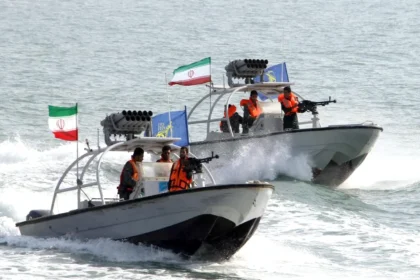
The announcement of “Project Freedom” came after reports that a cargo vessel near the Strait of Hormuz had been attacked by small boats, according to the United Kingdom Maritime Trade Operations center. This incident is the latest sign of the fragile security situation in waters close to the passage.
Through the new operation, Washington is seeking to present itself as a guarantor of freedom of navigation in one of today’s most dangerous maritime tension zones. However, the move may also carry the risk of further escalation. If Tehran views it as direct interference in its maritime sphere of influence or as an attempt to impose transit rules by force, tensions could rise.
U.S. reports indicate that the Trump administration had in recent days proposed the idea of building a broader international framework to reopen the strait and ensure the smooth flow of maritime traffic. This proposal is part of an approach combining military pressure with coordination among countries affected by the disruption of trade.
Safe Passage Through a Strategic Maritime Route
While Trump describes the operation as serving the interests of Iran, the Middle East, and the United States, the broader message appears to be directed at markets, allies, and adversaries alike. Washington does not want to leave ships stranded in a strategic passage. However, it is also prepared to use its naval power if the escort operation faces any obstruction.
The first hours of implementing “Project Freedom” are expected to reveal the extent of the United States’ ability to secure safe passage for ships. However, it remains to be seen whether the operation will stay limited to maritime guidance and escorting. There is a possibility it could turn into a new chapter in the open confrontation over the Strait of Hormuz.