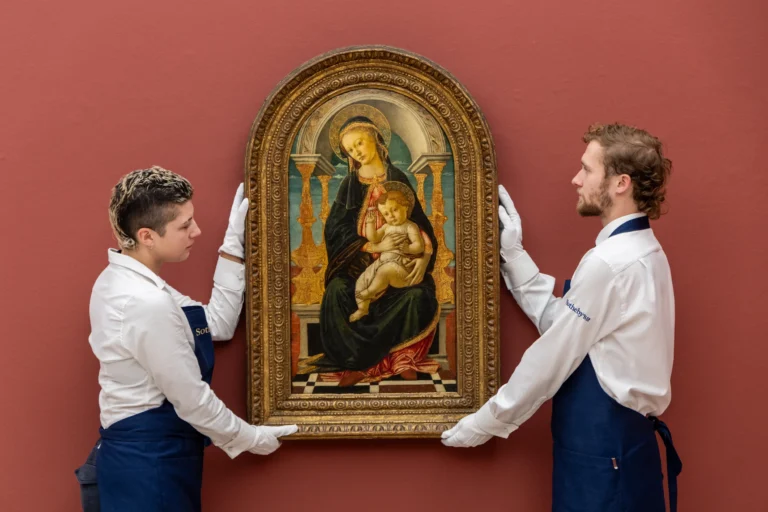
London – In an official move to protect global heritage within its borders, British authorities have issued an order preventing the export of a rare painting by the renowned Italian artist Sandro Botticelli. Obviously, by May 2026, the UK has decided to impose strict restrictions on the departure of exceptional artworks. This decision grants local museums and cultural institutions a “last chance” to raise the necessary funds to acquire the painting, preventing it from vanishing into private collections abroad.
“A Last Chance”: UK Museums Race Against Time to Save Renaissance Legacy
The Reviewing Committee on the Export of Works of Art confirmed that the Botticelli masterpiece holds an inestimable cultural and artistic value. Accordingly, a temporary “export bar” has been activated. Clearly, this policy aims to give national institutions priority in acquisition against fierce competition from international collectors and major museums worldwide, especially since works by Renaissance icons like Botticelli are rare targets in the global art market.
“Preserving Identity”: A British Strategy to Prevent the Leakage of Historical Treasures
Observers believe this decision is not merely a routine procedure but part of a firm cultural policy to halt the “migration of treasures.” As a result, the UK has increasingly used the “export bar” weapon to ensure these masterpieces remain accessible to the public and researchers within its borders. Amidst rising global demand for rare classics, this move sends a clear message: the artistic treasures that have entered Britain have become part of its cultural fabric, which it will not easily surrender.