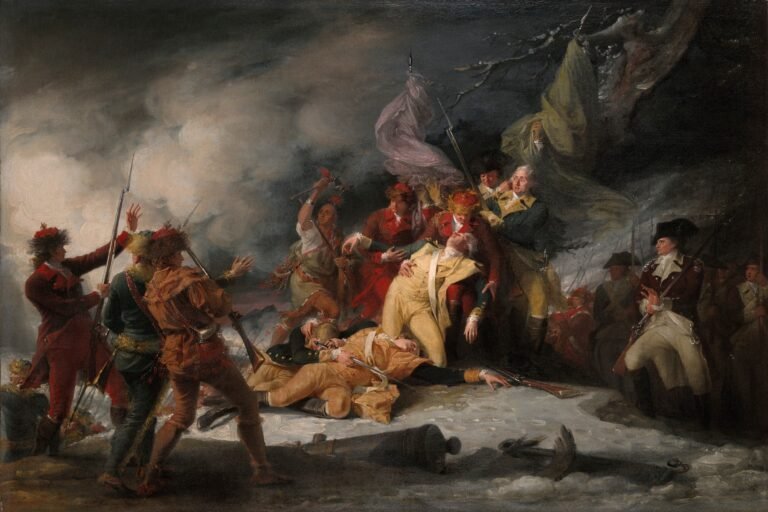
Quebec, Canada – The Battle of Trois-Rivières stands as one of the most influential military milestones in the course of the American Revolutionary War. This pivotal confrontation took place on June 8, 1776, and played a strategic role in ending American attempts to control the Canadian province of Quebec. This battle served as the wall against which the ambitions of the rebellious colonies to annex northern territories to their emerging entity collided.
At that time, American forces were striving to expand their military operations into Canadian soil. The strategic goal was to gain the support of local inhabitants and undermine British influence in the region. However, the confrontation that occurred between Montreal and Quebec City completely shifted the balance, turning “expansionist hopes” into a “retreat phase.”
British Tactics and American Impasse
In a related context, the battle came after a series of complex military maneuvers on the northern front. British forces, which had received significant reinforcements, succeeded in regaining the tactical initiative. In contrast, American forces suffered from poor intelligence coordination and extreme difficulty maneuvering within the region’s rugged terrain. This impasse allowed British forces to encircle American units, forcing them to retreat after sustaining heavy losses in personnel and equipment.
Furthermore, historians agree that the defeat at Trois-Rivières was the “turning point” in the American campaign. This outcome forced the American leadership to completely rethink its strategy, initiating a gradual retreat from Canadian territory, which permanently ended the project of annexing Quebec to the American Revolution.
A Military Legacy That Defined Borders
On another note, the results of this battle contributed to consolidating British control over Canada. After this failure, the military leadership in the American Revolutionary War focused its efforts entirely on other fronts within the Thirteen Colonies, abandoning the project of northern expansion. This battle established the geopolitical borders we know today between the United States and Canada.
In conclusion, Trois-Rivières remains present in historical memory as a military event that not only changed the course of the conflict but also defined the historical relationship between the two northern neighbors. It is the story of a battle that proved borders are not only drawn by diplomacy but are often decided on the battlefields that shape the destinies of nations.