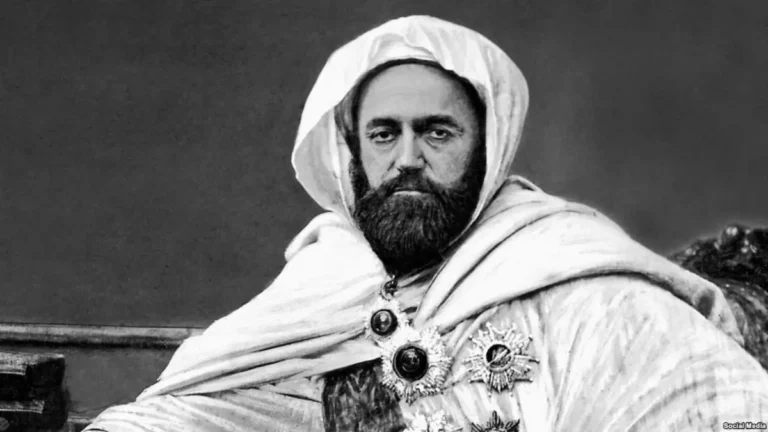
Tafna – Algeria — The Treaty of Tafna stands out as one of the most prominent political and military milestones in the epic history of the Algerian resistance against French colonization. Through this pivotal accord, Emir Abdelkader Al-Jazairi successfully extracted official, sovereign recognition from France regarding his authority and governance over vast territories of the nation—a historic breakthrough reflecting his supreme leadership, strategic acumen, and establishing his enduring legacy as a premier icon of 19th-century national liberation movements.
The Context of Resistance and Geopolitical Compulsions
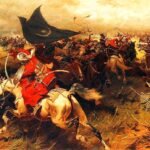
The treaty materialized amidst highly intricate field realities and political shifts that swept Algeria following years of relentless armed resistance against the French invading forces, which had initiated their brutal occupation of the country in 1830 AD. Emir Abdelkader orchestrated a sequence of masterful tactical campaigns and battlefield victories that severely exhausted the French ranks, forcing Paris generals to completely overhaul their military doctrines after facing immense difficulties and fierce local opposition in securing control over the country’s interior heartlands.
Against this high-pressure backdrop, the historic Treaty of Tafna was brokered in 1537 AD between Emir Abdelkader and French General Thomas Robert Bugeaud near the banks of the Tafna River in western Algeria. The structural provisions of the treaty mandated an immediate cessation of all military hostilities between both factions. In exchange, France formally recognized Emir Abdelkader’s direct rule over expansive regions of the Algerian interior, while the French expeditionary forces maintained restricted jurisdictions over a handful of strategic coastal cities and maritime hubs.
State-Building and the Temporary Armistice
At the time, the accord represented a stellar diplomatic and political triumph for Emir Abdelkader. It effectively endowed his young administration with concrete institutional legitimacy and enabled him to expand his administrative borders and systematically organize state apparatuses within territories under his command. Furthermore, the Emir brilliantly utilized this window of relative calm and truce to reorder his military divisions, upgrade administrative operations, and bolster the economic frameworks he had initiated as part of his visionary blueprint to construct a modern, sovereign, and resilient Algerian state capable of confronting imperial threats.
During the immediate post-treaty years, Emir Abdelkader worked tirelessly to develop advanced governance methodologies, establish central fortresses and command bases, secure disciplined tax collection networks, and modernize the training and capabilities of the standing military. These achievements drastically amplified his leverage and prestige among various Algerian tribes, solidifying his charismatic, political, and military status across the regional landscape.
The Breach of Faith and a New Phase of Struggle
However, this hard-won treaty did not withstand French colonial ambitions for long. Intense frictions quickly resurfaced and shook the region following mutual allegations of violating the terms of the pact and breaching its core agreements. Consequently, armed clashes reignited with unprecedented violence and scale. With the escalation of ruthless scorched-earth campaigns by the French and their vast numerical and technological superiority, the Algerian resistance entered a grueling, highly exhausting phase of asymmetric warfare that persisted for several years before ultimately concluding with Emir Abdelkader’s honorable surrender in 1847 AD to prevent further bloodshed of his people.
Despite that eventual outcome, the Treaty of Tafna remains a timeless historical testament to a brilliant epoch in which a resilient Algerian leader successfully forced an imperial superpower to treat him as an equal political and military peer, extracting formal, legal validation of his statehood. This legacy permanently cements the pact as one of the proudest and most crucial chapters in the chronicles of the glorious Algerian struggle against occupation.