
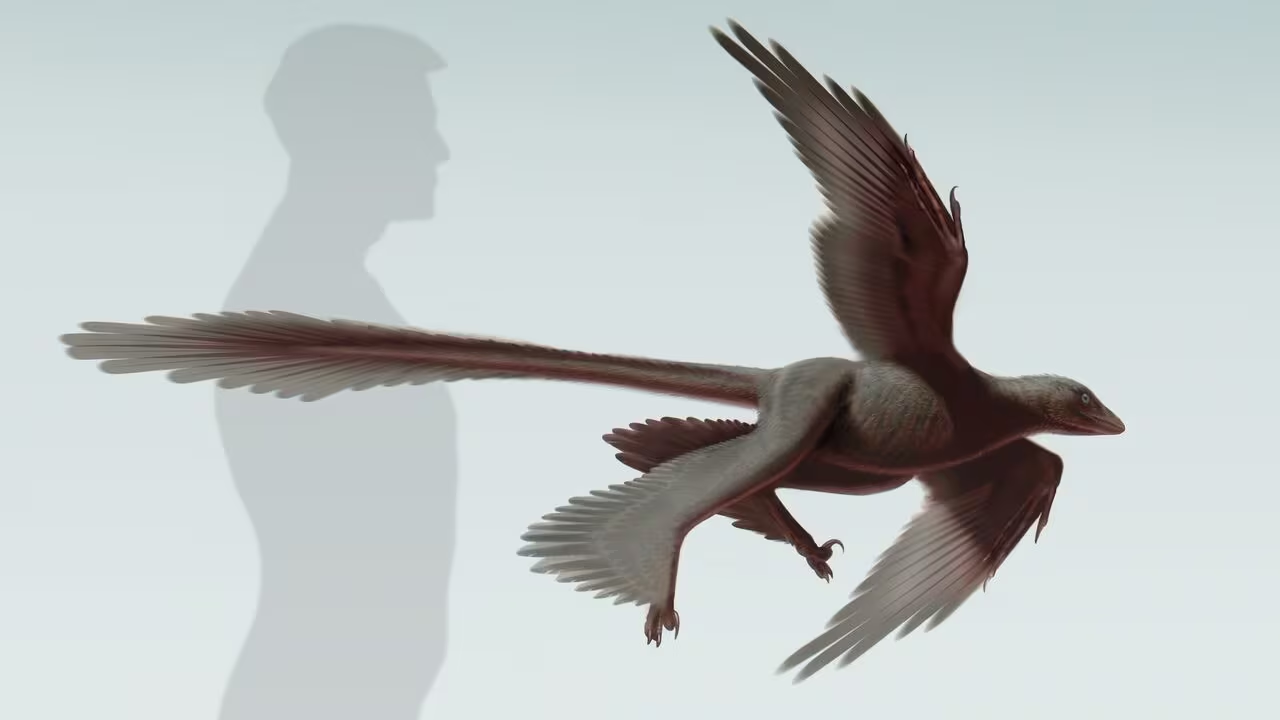
Beijing – In a scientific discovery described as the “missing link” in evolutionary history, a team of scientists in China has announced the finding of a rare fossil of a four-winged dinosaur. Obviously, by May 2026, this discovery is rewriting the story of flight. Examinations showed that the prehistoric creature possessed long feathers not only on its forelimbs but also on its hindlimbs, suggesting that early “bird ancestors” relied on a quad-wing system to help them glide between trees millions of years ago.
“Flight or Glide?”: How the Four-Winged Dinosaur Changed the Concept of Aerial Movement
Researchers clarified that the biological design of this dinosaur supports the hypothesis that flight evolved gradually through complex stages. Accordingly, scientists suggest that birds did not start flying directly from the ground to the sky, but began as tree-dwelling creatures using their four limbs as “parachutes” for gliding. Clearly, this discovery provides compelling evidence that nature tested multiple wing models before settling on the single pair we see in modern birds.
“Rewriting History”: Are Theories of Bird Origins Becoming a Thing of the Past?
Paleontology experts believe this fossil represents a stunning addition to paleobiology; it forces the scientific community to re-evaluate established theories on how creatures gained the ability to fly. As a result, the door has opened for new studies to understand biological adaptation mechanisms and environmental impacts on limb morphology. In this landscape, the new Chinese fossil remains a reminder that the earth still hides secrets capable of changing our understanding of the universe and the history of life on our planet.