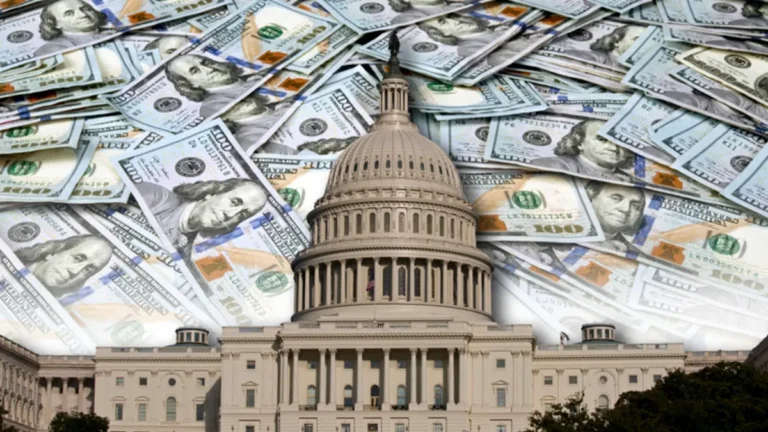
Washington, DC – The US economy reached a historic low as the national debt surpassed $40 trillion for the first time ever. This has heightened concerns among experts and analysts about the widening budget deficit. There are also growing fears about the rapidly rising cost of borrowing by the federal government.
Treasury data exceeded official expectations
Official data released by the U.S. Treasury Department showed that the outstanding national debt reached $40.05 trillion at the close of trading on Tuesday. This astronomical figure far exceeded previous projections issued by the Congressional Budget Office, which had estimated the debt at around $39.4 trillion by the end of fiscal year 2026. This rapid increase means that the U.S. Treasury is now obligated to pay enormous sums simply to service its existing debt. This burden is further exacerbated by current interest rates and Treasury bond yields.
Reasons for the accelerated growth of debt and fiscal deficits
The persistent inflation of the public debt stems from a combination of overlapping structural and political factors. Among the most prominent are escalating government spending on healthcare and social security programs, and a massive increase in debt interest payments. Government revenues have also been negatively impacted by declining tax and customs revenues. This occurred particularly after the Supreme Court’s decision to overturn some of the tariffs previously imposed by President Donald Trump. This negative development coincided with a rise in long-term Treasury yields to their highest levels since 2007, driven by inflationary concerns related to regional conflicts in the Middle East.
Economists warn of an unsustainable path
In the same vein, Jessica Riddell, a budget and tax expert at the Brookings Institution, warned that US public finances are on a completely unsustainable path. She pointed out that the annual budget deficit is approaching the $2 trillion mark despite economic growth. The deficit has reached approximately 7% to 8% of GDP. In comparison, previous deficit levels did not exceed 4%. This situation is exacerbating the concerns of investment markets regarding Washington’s ability to control its debt in the future.