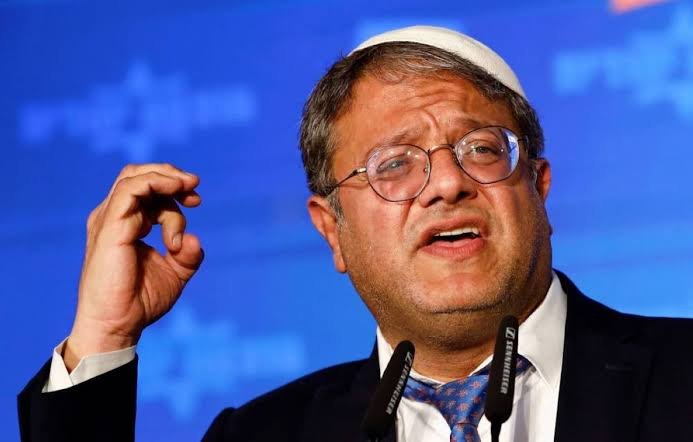
- The man may pass away… but what did he leave behind?
- The police: Who holds the keys to power?
- 337,000 weapons… Did Ben Ghafir leave behind a different society?
- Prisons… When ministerial decisions become law
- Al-Aqsa: The issue that could ignite the region
- The West Bank: The file that reveals Ben-Gvir is not alone
- Settler violence: a phenomenon older than the minister.
- Ben Ghafir: Maker of transformation or son of transformation?
- What will remain after him?
- What if Ben Gvir disappears tomorrow?
Tel Aviv, Israel – The most important question regarding Israeli National Security Minister Itamar Ben-Gvir is no longer what he says or how far he is willing to go in his positions, but rather: what will remain of his policies if he leaves the government tomorrow? Ben-Gvir did not enter the government as an ordinary minister, but as a representative of a hardline right-wing faction with a different vision for security, the police, prisons, weapons, Jerusalem, and the West Bank. During his tenure, some of his ideas were translated into legislation and institutional procedures, while other issues were addressed in parallel by ministries and institutions not directly under his control. Herein lies the paradox: was Ben-Gvir the architect of this transformation, or merely its most visible face?
The man may pass away… but what did he leave behind?
Since assuming the Ministry of National Security, Ben-Gvir’s name has been associated with expanding the minister’s influence over the police, civilian gun policies, the prison administration, and the Border Police. Conversely, issues such as the West Bank, settlements, and military security fall within a broader network encompassing the government, the army, the Ministry of Defense, the Knesset, and the security and judicial apparatuses. Knesset documents reveal that the relationship between the minister and the police has become a recurring political and institutional issue in recent years, including discussions of the ministry’s performance and changes to police data dissemination policies. The minister’s departure does not necessarily mean the dismantling of the structure that emerged during his tenure.
The police: Who holds the keys to power?
Can Israel simply return the police force to its pre-Ben-Gvir state? The powers of the Minister of National Security and his relationship with the police have become a subject of political and legal conflict in recent years, with the Supreme Court intervening to determine the limits of political authority over the police, emphasizing the necessity of their independence from partisan considerations. Thus, Ben-Gvir’s departure may alter the way powers are exercised, but it does not automatically erase the laws, appointments, budgets, and structures established over the past years.
The crucial question is: Can the minister be changed more quickly than the institution itself?
337,000 weapons… Did Ben Ghafir leave behind a different society?
The issue of civilian firearms is one of the areas where Ben-Gvir’s influence is most readily apparent. During his tenure, the Ministry of National Security pushed for an expansion of gun licensing, and the Knesset passed amendments related to the firearms system. Ben-Gvir also presented to the National Security Committee what he considered his ministry’s achievements, including an expanded civilian security response.
However, one politically difficult truth remains: licenses issued do not disappear with the departure of the minister, and weapons that have entered society do not automatically revert to the state. This raises the question: Did Ben-Gvir leave behind a more heavily armed society, even if government policy were to change tomorrow?
Prisons… When ministerial decisions become law
In the prisons file, Ben-Gvir’s influence was most evident; he presented the changes he introduced to the Prison Service to the Knesset as a fundamental part of his security policy. However, some of these policies moved from mere pronouncements to legislation. In March 2026, the Knesset passed, in its final readings, a law concerning the death penalty in terrorism cases, which included amendments to the Prison Service Law.
Here, the equation changes: the man can leave… but the law needs another law to be repealed.
Al-Aqsa: The issue that could ignite the region
Ben-Gvir made the issue of Jewish prayer and presence on the Temple Mount a recurring theme in his speeches, and his name became associated with actions that raised concerns about altering the status quo. However, this issue transcends a single ministry and involves highly sensitive security, political, and diplomatic considerations.
Therefore, the question is not simply: What does Ben-Gvir want? But rather: Have some of his practices become institutionalized policy, or could they be reversed with a change of minister? The difference between these two possibilities could have repercussions extending beyond Israel to the entire region.
The West Bank: The file that reveals Ben-Gvir is not alone
Herein lies the strongest evidence that the Israeli transformation extends far beyond Ben-Gvir. In August 2026, Israeli Defense Minister Yisrael Katz instructed the army to prepare a plan to transfer law enforcement powers related to West Bank settlers to the police, as part of broader changes in the way the West Bank is governed. This decision was not made by Ben-Gvir, and this is a crucial point. If these trends continue after his departure, it becomes difficult to interpret them as the project of a single minister. Ben-Gvir may be one of the most vocal figures in the transformation, but he is not necessarily its sole source.
Settler violence: a phenomenon older than the minister.
It is illogical to reduce the phenomenon of settler violence to Ben-Gvir alone; the phenomenon predates his time in government, and the responsibilities of the army, police, government, and judiciary are intertwined. However, the question that warrants investigation is: Have the mechanisms for dealing with this phenomenon changed during his tenure? As the debate surrounding violence in the West Bank continues, the recent moves to transfer some law enforcement powers to the police have opened a broader discussion about the nature of security and legal administration in the West Bank. Here, it is essential to distinguish between the existence of the phenomenon and the state’s policy toward it.
Ben Ghafir: Maker of transformation or son of transformation?
With the Israeli elections scheduled for October 2026 approaching, the influence of the hard right has become a key factor in political calculations. Recent coverage indicates a growing controversy surrounding Ben-Gvir’s positions, as the Israeli government grapples with complex political and security pressures. This brings us back to the starting point: Is Ben-Gvir pushing Israel to the right, or has a shift within Israeli society and politics created his rise? The answer is crucial; in the first case, his departure could alter the trajectory, while in the second, it might merely change the figurehead.
What will remain after him?
Ben-Gvir’s legacy can be divided into three spheres:
Things that can be changed quickly: some security directives, the management style of the police and prisons, and some policies related to Al-Aqsa.
Things that require time: legislation, appointments, budgets, and the civilian gun system that has expanded in recent years.
Things that transcend the minister: settlements, the administration of the West Bank, the relationship between the army and the police, and the orientations of the ruling coalition.
And here lies the greatest paradox:
Ben-Gvir may leave office, but some of his policies may prove more powerful than the man himself.
What if Ben Gvir disappears tomorrow?
The tone might change.
Some statements might be softened.
Some files might revert to a more cautious approach.
But that doesn’t necessarily mean Israel will return to the way it was before Ben-Gvir.
Recent years have produced new legislation, changed institutions, a more militarized society, a more influential right-wing movement, and developments in the West Bank that bypass the Ministry of National Security. Therefore, the real question is not, “What will Ben-Gvir do if he leaves?” but rather, “What has Ben-Gvir done for Israel, and what has Israel done for Ben-Gvir?”
If the next government manages to reverse most of his policies, it will prove that he was an influential but replaceable figure. But if the core policies continue after his departure, the conclusion will be far more profound: Ben-Gvir was not the transformation itself, but rather one of its most visible symptoms.